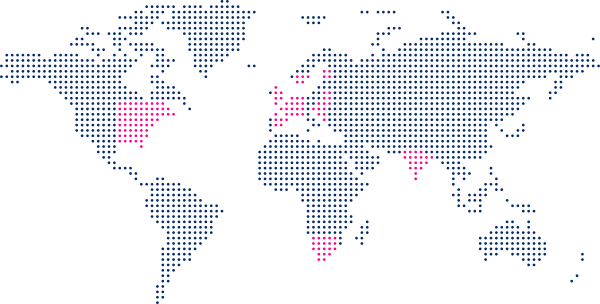
On 27th January 2026, the “Mother of all trade deals” was signed between the European Union and India after nearly 20 years of negotiations. Covering a combined market of around two billion people and roughly a quarter of global GDP, it is one of the most significant trade deals of the past decade.
For C-suite leaders, this is not just a geopolitical milestone. It has direct implications for growth strategy, opportunities for talent deployment supply chains, investment decisions and leadership priorities over the coming years. Dorota Cagiel from our New Delhi office explores the significance of this trade deal in the article below.
Executives are currently navigating an era of geopolitical tension and tariff unpredictability; the EU-India pact provides a significant counterweight to existing trade dependencies. This diversification can reduce geopolitical risk exposure and open alternative channels for growth.
At its core, the agreement significantly lowers barriers to trade on both sides. Most EU exports to India will see tariffs sharply reduced or eliminated over time, while the EU will also cut duties on the majority of Indian exports, supporting two-way trade in manufacturing, pharmaceuticals, textiles, consumer goods, and more.
Another area of positive development in the EU - India FTA is that it contains provisions regarding the relevant UN and ILO conventions advancing women’s economic empowerment and gender equality, including promoting cooperation in international force to advance these objectives.
For the C-suite leader, global operations must be reassessed and India’s role in European-led value chains must be re-evaluated. Leaders must consider integrating tariff reductions into pricing and commercial strategies, strengthen regulatory and compliance capabilities, and invest in local partnerships to accelerate market entry and execution.
Looking ahead, timing and governance remain important. Implementation will be phased and still requires approvals, with some sensitive sectors still protected and global trade tensions continuing to influence competitiveness. Even so, the deal represents a structural shift in EU–India economic relations, and early movers will be best positioned to translate policy change into lasting advantage.
For senior leaders operating across borders, Spain represents both opportunity and complexity. Spain is one of the EU’s largest economies and a critical gateway between Europe, Latin America, and North Africa. At Friisberg, our Madrid team, including consultants Gadea and Emiliano, work closely with boards and C-suite leaders to help them navigate the cultural and leadership realities that shape performance in the Spanish market. In this article Gadea and Emiliano share their insights on Spanish business culture.
From a C-suite perspective, Spain’s economy is anchored in three dominant sectors that define leadership demand, talent strategy, and organisational design. The services and tourism sector remains the largest economic driver, contributing over twelve per cent of GDP and employing millions across hospitality, transport, retail, and leisure. Executives in this sector face operational challenges in scaling seasonal workforces while maintaining service culture.
Manufacturing and automotive represent another strategic pillar. Spain is the second-largest car manufacturer in Europe, with a strong industrial base spanning automotive, chemicals, food processing, and advanced manufacturing. Leadership in this sector requires operational excellence and change capability, especially as organisations transition towards automation, electrification, and sustainability.
Energy and renewables form the third critical sector. Spain is a European leader in solar and wind, and the energy transition places pressure on boards and executive teams to ensure alignment to this. Across all three sectors, leadership quality and cultural alignment are decisive competitive factors.
Spain’s labour market is highly active but structurally different from many other EU economies. Employment has reached record levels of over 22 million people in work, and hiring demand remains strong, with job postings growing faster than in most major European markets.
At the same time, Spain’s unemployment rate of around ten to eleven per cent remains almost double the EU average of approximately six per cent. Countries such as Germany, the Netherlands, Poland, and Czechia operate at rates between two and four per cent. For the C-suite, this is not a contradiction but a strategic signal. Spain’s challenge is not a lack of demand but structural alignment. Regional differences, skills mismatches, and labour segmentation mean that talent strategy, leadership capability, and development pipelines require deliberate design.
In practice, growth strategies fail when talent strategy is treated as an operational issue rather than a leadership priority.
Spanish executives and leadership teams operate in a context where trust, credibility, and presence matter deeply. Decision-making structures tend to respect hierarchy, but performance improves when leaders remain accessible and visible. Authority is expected, but it must be balanced with relational leadership. C-suite leaders who rely solely on positional power often struggle to mobilise commitment, particularly when leading international teams or integrating Spanish operations into broader regional structures.
Effective leadership in Spain involves setting clear strategic direction, demonstrating consistent behaviour, investing time in relationships, and respecting local decision rhythms.
A defining feature of the Spanish talent market is the gap between capability and perceived opportunity. Senior leaders frequently encounter high-calibre professionals who are confident in their skills but sceptical about internal progression.
For boards and CHROs, this has direct implications for succession planning, leadership continuity, retention of high potentials, and executive bench strength. Organisations that do not articulate credible leadership pathways often lose talent externally, increasing risk and cost at senior levels. Succession planning in Spain must be visible, intentional, and linked to leadership development rather than treated as a confidential exercise disconnected from culture.
Spain has made significant progress in digital capability, particularly in energy, manufacturing, and services. However, transformation programmes frequently stall when cultural readiness and leadership alignment are underestimated.
Executives leading change initiatives must ensure leadership teams are aligned before execution begins, communication is consistent and human, and middle management is actively engaged as change carriers. Technology investment without leadership alignment remains one of the most common failure points observed by Friisberg consultants working with Spanish organisations. Our consultants noticed this misalignment during the pandemic with the increase in remote leadership and are seeing it again with AIs redefinition of how to work.
For CEOs and boards, Spain is a market where execution depends on leadership quality more than structural design alone. C-suite teams that succeed treat culture as a strategic asset rather than a soft variable. They invest in leadership credibility and trust-building, align talent strategy with long-term business objectives, approach succession and retention proactively, and adapt leadership style without diluting accountability.
Spain rewards leaders who understand that culture shapes outcomes. At Friisberg, we support boards and C-suite leaders in aligning strategy, leadership, and talent to the realities of the Spanish market.
Our Madrid office, led by consultants Gadea and Emiliano, partners with executive teams to strengthen leadership impact where it matters most.
To explore how cultural intelligence can strengthen your leadership agenda in Spain, visit:
👉 https://friisberg.com/offices/madrid/
Across politics, business, and public life, there is a growing pattern of leaders choosing what is expedient over what is responsible. The consequences are increasingly visible: erosion of trust, polarisation, reputational damage, and weakened institutional credibility.
This is not a problem confined to any one country. It is a global leadership challenge, and UK boards and executives are not immune.
At its core, the issue is simple: in moments of pressure, leaders face a choice between short-term advantage and long-term integrity. The easy option often promises speed, certainty, and applause, whereas the harder option demands restraint, accountability, and moral clarity.
Only one of these builds durable authority.
The defining test of leadership is not performance in stable conditions, it is conduct under strain. When scrutiny intensifies, uncertainty rises, or reputational risk looms, true leadership reveals itself in how decisions are made, not just what decisions are reached.
Weaker leadership tends to amplify risk. It trades credibility for control, inflames rather than steadies, and optimises for short-term optics at the expense of long-term trust.
UK organisations are operating in a climate of heightened transparency, regulatory oversight, workforce activism, and public scrutiny. Expectations on pay fairness, governance standards, ESG credibility, and ethical conduct are rising.
Leadership is no longer assessed solely on commercial outcomes. Stakeholders now evaluate how results are achieved, how people are treated, and whether leaders demonstrate sound judgement when decisions are difficult or unpopular.
This creates a strategic imperative. Organisations led by individuals who default to speed, dominance, or deflection carry hidden risk. Those led by individuals who demonstrate integrity, composure, and principled decision-making build resilience, legitimacy, and long-term value.
Boards play a decisive role in setting leadership standards, yet many still over-weight experience, reputation, or track record without fully testing how leaders behave under ethical, reputational, or cultural pressure.
The next generation of leadership assessment must go further:
This is not about idealism. It is about risk management, organisational health, and sustainable performance.
We work with boards and senior leaders on executive search, leadership assessment, succession planning, and governance. Our focus is not only on capability and experience, but on character, judgement, and long-term leadership impact.
Friisberg in the UK helps organisations identify leaders who:
In an increasingly volatile environment, leadership quality has become one of the most material drivers of organisational success.
This is the moment to reset leadership expectations.
Ask whether your organisation rewards decisiveness over discernment, performance over principles, or speed over sound judgement. Examine whether your leadership culture is designed to build trust or simply maintain control.
Austria’s workforce values stability and structure. 79% of employees are on permanent contracts, and the average tenure in the same organisation is approximately 10 years, reflecting a strong preference for long-term employment relationships. Organisational culture and leadership authenticity are also important: studies suggest that over 50% of employees perceive alignment between their organisation’s stated values and actual leadership behaviour.
Diversity, equity and inclusion (DEI) is gaining attention, with around 60% of Austrian companies having formal DEI policies, while wellbeing initiatives are well established, with over 65% of organisations implementing formal policies to support employee health, engagement and work-life balance. Younger professionals increasingly expect inclusive leadership and flexible working arrangements, which can challenge traditional hierarchical norms.
Friisberg’s on-the-ground expertise ensures international companies understand these cultural nuances, align leadership behaviour with local expectations, and integrate effectively into the Austrian business landscape.
Austrian organisations tend to have structured hierarchies, with clear lines of responsibility. While input from teams is welcomed, major decisions are typically taken at senior levels. Formality and professionalism are valued, particularly in communication and negotiation.
With 79% of employees on permanent contracts and an average tenure of 10 years, Austria’s workforce values job security and long-term planning. Companies are expected to provide predictable career paths, clear responsibilities, and professional development opportunities.
Authenticity and alignment between leadership and organisational values are crucial. Employees are more engaged when leadership behaviour reflects the company’s stated principles, and Austrian firms are increasingly investing in employee development to ensure cultural fit and performance alignment.
DEI is an emerging priority: approximately 60% of Austrian companies have formal DEI policies, focusing on gender balance, inclusive leadership, and equitable recruitment practices. Younger professionals, especially those under 35, place a high value on inclusivity and fairness in organisational culture.
Over 65% of Austrian organisations have formal wellbeing policies, covering health, work-life balance, and employee engagement. However, implementation can vary across industries, highlighting the need for clear communication and management follow-through. Austrian organisations are also increasingly offering innovative benefits such as flexible working, mental health support, and wellness programmes.
Younger employees are driving change in Austrian workplaces. A growing proportion of professionals prioritise inclusive leadership, flexible work arrangements, and meaningful professional development. Companies that adapt to these expectations are more likely to retain talent and sustain engagement.
Austria combines traditional hierarchical structures with evolving modern expectations. Friisberg helps leaders adapt their communication, decision-making, and engagement approaches to local norms.
High levels of workforce stability and long tenure mean that employee engagement, career development, and trust-building are central to success. Friisberg helps international companies design strategies that reflect these priorities.
With authenticity and alignment between leadership and organisational culture increasingly important, Friisberg provides guidance on aligning values, behaviours, and policies to ensure cohesive teams.
Business in Austria is relationship-driven. Friisberg’s local presence allows companies to establish the trust, credibility, and networks necessary for sustainable success.
Austria offers a stable and attractive environment for international business, but cultural understanding is key. Success depends on recognising hierarchical norms, promoting authentic leadership, and implementing inclusive, employee-focused policies. Friisberg’s local expertise ensures organisations navigate Austrian culture effectively and maximise their long-term potential.
Our Austrian office, located in Vienna, is led by Partner Sabine Pirkner. Sabine brings nearly 20 years of experience in international board, C‑level and leadership‑team assessment and development. Under her leadership, the Vienna team delivers tailored executive‑search, leadership consulting and organisational‑culture advisory services combining local Austrian insight with the global reach and standards of Friisberg.
Note: These insights reflect common patterns observed in professional settings. Every individual and organisation is unique, and no culture can be defined in absolute terms. Our aim is to highlight trends that international leaders may encounter when working across borders, and to share how Friisberg helps clients navigate these differences with respect and effectiveness.
Executive search is one of the first areas where AI has started to deliver tangible value but his is not surprising. Large data sets, extensive market mapping, and significant time pressure make parts of the search process well suited to intelligent automation.
However, this is also where I observe some of the greatest misunderstandings.
There is a growing assumption that increasing speed and efficiency through AI will automatically improve the candidate experience. At senior levels, this is rarely true.
Executives do not remember a search process because it was fast. They remember it because it was thoughtful, discreet, and respectful.
When applied with care, AI can meaningfully support:
Used well, these capabilities can enhance rigour, consistency, and scalability without compromising quality.
AI is not suited to:
One of the most common mistakes organisations make is automating precisely these areas.
Generic outreach, automated rejection messages, or a lack of meaningful follow-up do not create efficiency. They erode confidence and damage reputation.
In executive search, candidate experience is inseparable from organisational reputation. Senior leaders do not disappear when a process concludes, they remain visible in the market: they talk and they remember.
Search today is therefore not only about identifying the right leader, it is a reflection of the organisation’s judgement, values, and professionalism.
The strongest practices I see are those where:
The real question is not where AI can be used, but where human judgement must remain central. Because at its core, executive search is not data processing - it is judgement, trust, and relationships. If you experienced your own executive search process as a candidate, how would it reflect on the organisation behind it?
A toborzás kétségkívül az egyik első terület, ahol az AI valódi segítséget tud nyújtani már régóta és egyre inkább.
Sok adat, sok ismétlés, nagy volumen, folyamatos időnyomás – logikus, hogy itt jelenik meg először az automatizáció.
Tapasztalataim alapján, mégis, itt látom a legtöbb félreértést.
Sokan abból indulnak ki, hogy ha egy kiválasztási folyamat gyorsabb és hatékonyabb lesz, akkor automatikusan jobb élményt is nyújt a jelölteknek. A valóság azonban ennél árnyaltabb.
A jelöltek ritkán azért emlékeznek pozitívan egy kiválasztásra, mert az gyors volt.
Sokkal inkább azért, mert emberséges, tiszta és tiszteletteljes volt.
Az AI valódi értéket tud teremteni, ha jól használjuk. Segíthet:
Ezek mind fontosak. És mind hozzájárulhatnak ahhoz, hogy a toborzás professzionálisabb, következetesebb és skálázhatóbb legyen.
Az AI nem alkalmas arra, hogy:
Mégis, sok szervezet itt követi el a legnagyobb hibát: automatizálja azt is, amit nem kellene.
Gondolok itt az automatikus elutasító üzenetekre, a sablonos, személytelen válaszokra.
Teljes csend azok felé, akik időt és energiát fektettek a jelentkezésbe.
Ezek nem hatékonyságot hoznak, hanem rombolják az employer brandet. A cégedét.
A jelöltélmény ma már reputációs kérdés, és az újabb generációk megjelenésével a munkaerőpiacon, még inkább az lesz.
A jelöltek nem „eltűnnek”, ha nemet mondunk nekik. Megmaradnak a piacon. Beszélnek róla. Megosztják az élményeiket. Emlékeznek. Így egy kiválasztási folyamat ma már nemcsak döntés egy pozícióról vagy jelöltről, hanem névjegy a szervezetről. A vállalatod névjegye.
A legjobb gyakorlatokat ott látom, ahol:
Mert ne feledjük el: a toborzás végső soron nem adatfeldolgozás, hanem kapcsolódás.
Az AI segíthet abban, hogy gyorsabbak és pontosabbak legyünk, de az élményt továbbra is az dönti el, hogyan bánunk az emberekkel a döntések mögött.
At Friisberg, culture is not an abstract idea. It is something we experience every day in how we work, collaborate and support our clients. In our Culture Factor series, we explore how local contexts shape professional behaviour and organisational success.
Although our office is based in Amsterdam, our work extends across the country, including Oss, and is led by Maarten van de Sande, who heads Friisberg’s Dutch practice. From this base, we support organisations operating at the heart of the Netherlands’ most influential industries.
The Netherlands has a strong, open and internationally connected economy. Services account for more than three quarters of national output, and the country plays a central role in European and global trade. Key industries include logistics and infrastructure, agri food and life sciences, high tech systems and materials, energy and sustainability, and financial and professional services.
The Port of Rotterdam and Schiphol Airport position the Netherlands as a gateway to Europe, while world leading agricultural exports and advanced semiconductor manufacturing underline the country’s reputation for both scale and innovation. These sectors require leaders who can operate in complex ecosystems, balancing efficiency, innovation and collaboration.
Dutch business culture is known for its direct communication style. Clarity is valued over formality, and honest feedback is seen as constructive rather than confrontational. In practice, this enables faster alignment and reduces ambiguity in decision making.
This directness is closely linked to a strong sense of pragmatism. Ideas are expected to lead to action, and discussions are grounded in facts and feasibility. This mindset supports industries such as logistics, infrastructure and energy, where execution and reliability are critical.
Transparency and high ethical standards are also central to Dutch working culture. Open dialogue, clear expectations and integrity in leadership contribute to trust at both organisational and societal level. These values align closely with Friisberg’s approach to executive search and advisory work, where credibility and long-term impact are paramount.
While discussions are open and direct, decisions are rarely made in isolation. Consensus building, encouraging input from multiple stakeholders and shared ownership of outcomes are regarded highly. Although this can take time upfront, it leads to durable decisions and strong commitment during implementation.
Hierarchy exists, but it does not dominate interactions. Leaders are expected to be accessible, well prepared and open to challenge. Expertise and contribution often matter more than title.
At Friisberg, this influences how we assess leadership potential. We focus on leaders who can engage others, listen effectively and lead through credibility rather than authority alone.
Dutch organisations combine flexibility with a high degree of structure and planning. Deadlines are taken seriously, agreements carry weight and reliability is a key marker of professionalism. This cultural trait supports the Netherlands’ reputation as a dependable place to do business and underpins long term partnerships.
For international clients operating in or from the Netherlands, this predictability creates a strong foundation for growth and collaboration.
In the Netherlands, work–life balance is widely recognised as a key driver of sustainable performance. Productivity is assessed by outcomes rather than hours worked, and flexible working practices are firmly embedded in the culture. Working hours are clearly protected, and international companies operating in the Netherlands are expected to respect established business hours. Notably, around 50% of employees work part-time, reflecting a strong societal commitment to balancing professional and personal life.
This respect for personal time supports employee wellbeing, sharpens focus, and fosters long-term engagement. This cultural norm is especially valuable in knowledge-driven industries such as technology, life sciences and professional services, where creativity, critical thinking and sustained cognitive performance are essential for success.
As a highly globalised economy and home to many international organisations, the Netherlands has a naturally international mindset. All Dutch professionals speak English very well and many also master a second language. In many cases, English is even the company language. Multicultural teams are common, and inclusivity and diversity are increasingly recognised as strategic advantages rather than social initiatives.
Dutch organisations value diversity of thought and background, particularly in leadership teams. Friisberg supports clients in building inclusive leadership structures that reflect the markets and societies in which they operate.
Led by Maarten van de Sande, Friisberg partners with organisations across the Netherlands’ core industries, combining local cultural understanding with global expertise.
We support clients through executive search and leadership appointments, identifying leaders who can navigate transformation while aligning with organisational values and culture. We advise on organisational and cultural development, helping leadership teams align strategy, structure and behaviour. We also work closely with clients on succession planning and talent strategy, ensuring leadership continuity in fast evolving sectors.
Given the Netherlands’ role as a gateway to Europe, we regularly support cross border growth and international expansion, helping organisations understand local leadership expectations and cultural dynamics.
From our work in Amsterdam and beyond, one insight stands out clearly. In the Netherlands, culture is not a soft concept, It is a strategic advantage. Directness, collaboration, pragmatism & balance shape how organisations lead, innovate and perform.
At Friisberg, understanding and working with these cultural dynamics allows us to help clients build organisations where people and performance thrive together. That is the Culture Factor in action.
Note: These insights reflect common patterns observed in professional settings. Every individual and organisation is unique, and no culture can be defined in absolute terms. Our aim is to highlight trends that international leaders may encounter when working across borders, and to share how Friisberg helps clients navigate these differences with respect and effectiveness.
We spoke to our Managing Partner Dorota Cagiel based in New Delhi who shared her market insights into Indian Business culture.
Expanding into India involves more than market research or regulatory compliance. Success depends heavily on understanding the country’s cultural and organisational dynamics. Business in India often operates within a hierarchical, trust and relationship-driven context where decision-making can follow the hierarchy and respect for seniority remains deeply embedded. Communication is polite and indirect, and negotiations often involve building trust and relationships before final decisions are made.
In India around 60% of employees are on permanent contracts, while average tenure is 6.5 years, reflecting a mix of stability and project-based employment. Approximately 50% of leaders are perceived as behaving consistently with stated organisational values, and 48% of employees feel the culture reflects these values. Diversity, equity and inclusion policies are present in around 40% of Indian companies, while 55% of organisations have formal employee wellbeing programmes, though implementation varies widely.
Because of this complexity, having local insight helps international companies avoid missteps, build appropriate glo-cal people strategies, and adapt leadership style to local realities.
Hierarchy and authority remain central in many organisations, with senior executives holding most decision-making power. Formal titles and indirect communication are common, especially during early interactions, and meetings often begin with relationship-building before moving to formal discussion. Workforce fluidity is higher than in many European markets, and permanent employees often coexist with temporary staff.
Business relationships place strong emphasis on personal rapport, trust and long-term collaboration. Teamwork, loyalty and group cohesion are highly valued. Balancing traditional hierarchical norms with modern, agile management practices is a challenge. Organisations are increasingly investing in leadership alignment and employee development to strengthen the engagement.
Our India operations are supported from the New Delhi office with the team led by Dorota Cagiel. The team provides local expertise to interpret how Indian culture, from hierarchical structures to workforce flexibility and efficiencies as well as engagement, plays out in daily business.
Friisberg helps international clients align corporate governance, find top talent, grow leadership teams and train international and cross-cultural teams. The team also designs engagement, performance and retention practices suitable for India’s business environment. They advise on leadership interactions to respect local norms while remaining effective and bridging with foreign parties. By establishing credibility and networks, Friisberg enables sustainable operations and long-term success in India.
India presents vast opportunities and success requires cultural understanding, flexibility and strategic adaptation. With Friisberg’s local presence in New Delhi, under Dorota Cagiel’s leadership, international companies can navigate India’s workforce dynamics, cultural complexities and people challenges to build high-performing organisations.
Note: These insights reflect common patterns observed in professional settings. Every individual and organisation is unique, and no culture can be defined in absolute terms. Our aim is to highlight trends that international leaders may encounter when working across borders, and to share how Friisberg helps clients navigate these differences with respect and effectiveness.
UK leaders often assume that European employment regulation stops at the Channel.
This one does not.
The EU Pay Transparency Directive will fundamentally change how pay is discussed, disclosed, and challenged across Europe by June 2026. While the UK is outside the EU, the implications for UK-based organisations are already landing in boardrooms, hiring conversations, and candidate expectations.
This is not a theoretical future issue, it is a live leadership and talent risk.
By June 2026, EU member states must implement laws that introduce:
The intent is clear: reduce pay inequality by removing opacity from both recruitment and reward decisions.
Is this a good initiative? The consensus is broadly yes, with practical caveats. The EU Pay Transparency Directive is widely viewed by policymakers, academics and many employers as a meaningful step towards closing unjustified pay gaps and strengthening trust in pay systems. Greater transparency reduces information asymmetry, supports fairer negotiations, and forces organisations to confront structural inconsistencies that often sit unnoticed for years. Where opinion becomes more cautious is around implementation: employers are rightly concerned about administrative burden, inconsistent application across countries, and the need for robust job architecture before transparency is introduced. In short, the intent is strongly supported; the success depends on preparation. Organisations that approach pay transparency strategically see it as a cultural and leadership opportunity, while those that treat it as a compliance exercise risk exposure rather than progress.
Even without direct legal force in Great Britain, the impact is real in three practical ways.
1. UK companies with European operations: Any organisation employing people in the EU will need to comply locally. In practice, that often drives group-wide changes to job architecture, levelling, pay bands, and hiring processes. Fragmented approaches become very difficult to defend.
2. Candidate expectations are shifting: Once pay ranges become standard across European markets, opacity in UK hiring starts to feel outdated, particularly at senior levels and in scarce skill areas. Transparency increasingly signals confidence and fairness, not risk.
3. The comparison bar is rising: UK employers with 250+ employees already report gender pay gap data annually. The EU approach goes further, extending transparency into recruitment and employee access to pay information. Boards, investors, and employees will inevitably compare UK practice against this higher benchmark.
From my perspective, this is not a reward team problem, it is a leadership credibility issue.
If an organisation cannot clearly articulate:
then pay transparency will expose inconsistency fast - and inconsistency erodes trust, retention, and hiring outcomes.
The strongest leaders are acting before regulation forces them to.
They are:
At Friisberg, we work with clients across the UK (and through our local European offices) to navigate this shift with confidence.
That includes:
Pay transparency is not coming to “disrupt” good organisations, it is coming to reveal whether clarity already exists.
"As the year draws to a close and the holiday season invites us to pause and reflect, I would like to extend my sincere thanks to everyone who has contributed to Friisberg throughout the year. It has been a year marked by commitment, collaboration and meaningful progress.
"Our Executive Committee has devoted significant time and energy to addressing the topics that matter most for Friisberg and to shaping initiatives that will carry us forward. This collective focus continues to strengthen our organisation and our shared direction.
"I would also like to extend a special thank you to our UK and Finnish teams for organising two outstanding and truly memorable conferences. These events not only brought our community together but also introduced us to new colleagues who have already added great value to Friisberg. We are delighted to welcome Dorota Cagiel and Kıvanç Ersöz, whose experience, insights and engagement have already enriched our conversations, and we look forward to building the future together.
"As we look ahead, we are encouraged by the many exciting conversations currently under way and hope to continue welcoming new Partners in the year to come. We are especially looking forward to reconnecting and continuing these discussions at our spring conference in Istanbul.
"This year has also seen important progress in how we communicate and share our story. With renewed focus and energy behind our communications, we are seeing tangible results, and we encourage everyone to continue sharing news, ideas and achievements as we strengthen the Friisberg brand together.
"For now, however, it is time to slow down, switch off and enjoy the holiday season. Time with family and friends, good food, festive moments and well-earned rest. Thank you once again for a remarkable year. I wish you a restful holiday season and look forward to what we will achieve together in the year ahead".
Zoltán Pethõ - President
Sabine Pirkner recently attended The ADIPEC Exhibition and Conference in Abu Dhabi, one of the world’s leading energy conferences, bringing together over 2,250 companies from across the global energy ecosystem.
Despite the physical challenge of attending with a herniated disc Sabine found the experience energising and highly motivating. A major takeaway was the strong emphasis on real, practical AI applications, particularly at the AI Pavilion, where companies showcased how AI is already being used to drive technology advancement and market development.
One standout example was a smart helmet concept (Sabine is modelling fantastically!) that enables instant access to company data through a display and voice control, demonstrating how innovation is becoming increasingly practical and user-focused.
Drawing on her background in international consulting, Sabine highlighted a familiar lesson: innovation does not need to be perfect to begin. Progress comes from starting early and learning along the way.
From a Friisberg perspective, Sabine noted how critical it is to combine future-oriented innovators with pragmatic builders who can turn ideas into scalable tools. Encouragingly, our diagnostics already help identify individuals with strong innovation traits that organisations can build upon.
Seeing how companies such as ADNOC Group and Borouge continue to invest not only in technology but also in talent development was a powerful reminder that sustainable innovation depends on people as much as solutions. Sometimes pushing physical limits expands your mindset, and ADIPEC was a strong example of that in action!
Irena Petrova, Managing Partner at our Sofia office was recently interviewed by ECONOMY.bg as part of a feature with representatives of the Bulgarian Executive Search Association (BESA).
At the end of the year, Economy.bg gathered insights from leading executive search firms to highlight the key changes and trends of the past 12 months. We appreciate the opportunity to share our perspective alongside our BESA colleagues.
The article explores whether executive remuneration increased in Bulgaria and how 2025 unfolded for the executive search market. Irena shares her key insights below:
The year 2025 has brought significant changes in the landscape of artificial intelligence, leading to a re-evaluation of what it means to be human. The year has been marked by a shift from the notion of AI as a mere tool to a transformative technology that reshapes our understanding of human capabilities and societal interactions.
AI's Role in Society: AI has become a defining texture of waking experience, challenging our perceptions of reality and human interaction. It has crossed the point of no return, impacting various aspects of life, including; how we work, our creativity and privacy.
Human-Centric AI: The year has emphasized the importance of human collaboration and curation in the AI landscape. It has revealed that AI-generated content, while innovative, can also lead to misinformation and that human creativity comes out on top.
Human Intelligence and AI: The Mensa Foundation's exploration of human intelligence in the age of AI has led to the recognition of human and AI as complementary rather than competitive. This understanding highlights the unique qualities that humans bring to the table, such as creativity, emotional intelligence, and ethical reasoning.
AI's Impact on Mental Health: AI therapy chatbots have been tested and found to stigmatize certain conditions and suggest harmful responses, raising concerns about their reliability in mental health support. This has sparked discussions about the ethical use of AI in therapeutic contexts.
In conclusion, 2025 has been a year of profound change, where AI has not only advanced but also challenged our understanding of what it means to be human. It has brought to light the need for a balance between AI's capabilities and the human touch that cannot be replicated by machines.
With 32 offices across 22 countries, we asked our teams to share their holiday traditions. From Bulgaria to New Delhi, their responses reveal a striking common thread: across cultures, winter is a season to create light, connection and energy through rituals, food and community.
Across the Alps and Rhine, French families, particularly in Alsace and Moselle, mark Advent with candles, bake traditional bredeles and visit Christmas markets that fill towns with light. The main celebration on 24 December revolves around a family meal and gift-giving, surrounded by illuminated streets and glowing lanterns. In Germany, Christmas markets transform cold town squares into warm communal spaces, where mulled wine, roasted almonds and music provide comfort and shared joy.
In Bulgaria, Christmas Eve begins with a vegetarian supper featuring symbolic dishes: grains for continuity, beans and nuts for health, honey for sweetness, and bread baked with a hidden coin for luck. The badnik, a ceremonial log, is burned for warmth and blessings, while children practise survakane, tapping adults with decorated cornel branches and reciting blessings. Before sunrise on Christmas Day, groups of Koledari sing ritual songs, and in some villages masked Kukeri dancers ring bells and leap through fire to chase away negative spirits and awaken new energy.

This year, Ukrainians are celebrating Christmas with Europe on 25th December rather than on the 7th January, a symbolic choice that reflects our shared values and cultural direction. Ukrainian New Year traditions remain deeply rooted. We place a Didukh, a sheaf of wheat symbolising our ancestors, near the festive table. Families prepare kutia, holubtsi and varenyky, and always leave a place for those who cannot come home. This year, many chairs remain empty because someone is defending Ukraine. We even joke that we have never been closer to our ancestors. While the world prepares fireworks and LED decorations, we mark the New Year with the most authentic “traditional lighting” – candles during blackouts. It is a dark joke, yes, but one born from resilience, not despair.
Traditions continue, even during power cuts, in shelters, and with unstable internet. Christmas follows the winter solstice, the longest night of the year, after which days begin to grow longer. Light always triumphs over darkness. Our ancestors celebrated this with rituals, carols, and warmth shared around the table. Today, we feel it anew: even when the city goes dark, a single candle can still illuminate the room, a reminder that darkness is temporary.
When one flame becomes the centre of the celebration, it shows what New Year truly means here: family, culture, and the enduring belief that even the longest night will end.
In Poland, the first star in the sky signals the start of Christmas Eve. Families share opłatek, exchange blessings, and sit down to twelve meatless dishes, leaving an empty place at the table as a gesture of hospitality and inclusion.
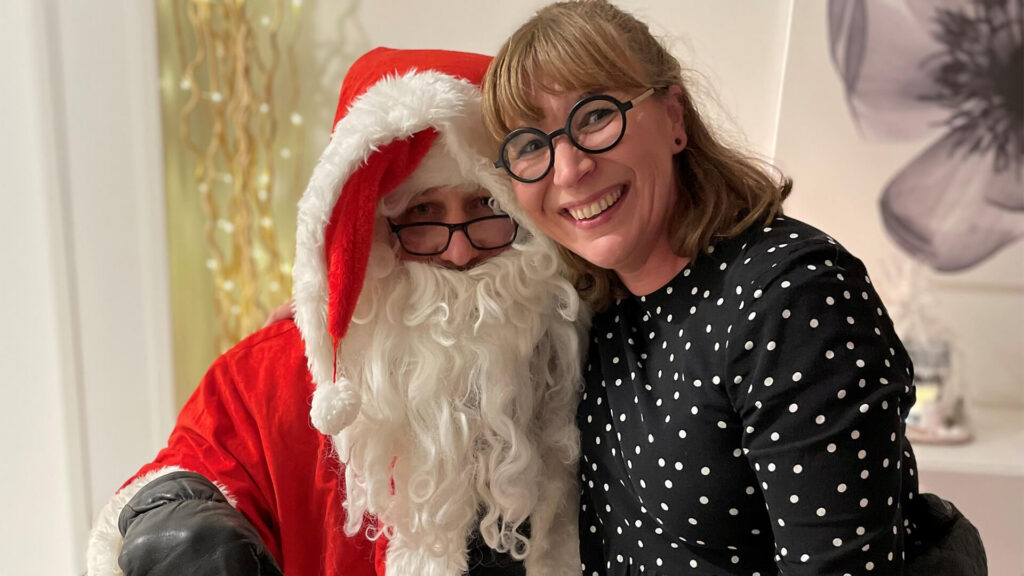
Further north, in Finland, the season is quieter and more reflective. Families gather at home, enjoy traditional foods passed down through generations, listen to melancholic Christmas music, and celebrate Santa Claus as a symbol of trust and goodwill. Saint Lucy’s Day also brings symbolic light during the polar night, highlighting the importance of hope and warmth.
In India, Christmas transcends religion, celebrated across states from Goa and Kerala to the North East and major cities. Midnight masses, family gatherings, festive street markets, bakeries overflowing with seasonal treats and shared meals turn the season into a nationwide celebration of togetherness.
In the United Kingdom, England balances ritual and humour. Christmas cards, table crackers and Stir-Up Sunday pudding-making combine tradition and shared silliness, while in Scotland Hogmanay is a full-scale celebration of fire, music and community. Torchlight processions, shortbread exchanges and even the Loony Dook, a New Year’s Day plunge into the freezing sea, show a unique blend of bravery, camaraderie and festive spirit.
In Lithuania, Advent is a time of reflection and anticipation. Families light one candle each Sunday, and Christmas Eve, Kūčios, remains the season’s most significant celebration, marked by a symbolic dinner, shared blessings and family connection.
Finally, in the Netherlands, December begins with Sinterklaas on 5 December, a children’s festival featuring gifts, sweets such as pepernoten and chocolate letters, and playful poems. Christmas itself is centred on family, candlelight and multi-course meals, often accompanied by handmade ‘surprises’ that emphasise thoughtfulness over extravagance.
Across these diverse traditions, some themes are universal. Light is used to dispel darkness, food carries symbolic meaning, movement and ritual release energy, and inclusion is actively practised through gestures such as empty chairs, door-to-door visits and shared celebrations. Winter, rather than a season to endure, becomes a period organised around ritual, community and continuity.
Friisberg’s teams show that even in the coldest, darkest months, connection, creativity and care can turn tradition into energy, and shared experience into resilience.

You need to load content from hCaptcha to submit the form. Please note that doing so will share data with third-party providers.
More InformationYou need to load content from reCAPTCHA to submit the form. Please note that doing so will share data with third-party providers.
More InformationYou need to load content from reCAPTCHA to submit the form. Please note that doing so will share data with third-party providers.
More InformationYou need to load content from reCAPTCHA to submit the form. Please note that doing so will share data with third-party providers.
More InformationYou need to load content from Turnstile to submit the form. Please note that doing so will share data with third-party providers.
More Information