For years, technology was seen as a back-office function. It kept systems running but rarely influenced the bigger picture. That is changing fast.
According to McKinsey & Company’s Global Tech Agenda 2026, CIOs are moving from managing infrastructure to shaping strategy. Technology is no longer just a tool for efficiency, it is now the engine of growth and competitive advantage.
This means companies need to broaden their hiring criteria. Exceptional CIOs today combine technology mastery with strategic vision. They understand AI and digital platforms, but they also know how to influence business strategy, drive innovation and lead cross-functional teams. Organisations that continue to hire solely for technical depth risk missing leaders who can translate technology into tangible business impact.
Experience in embedding AI at scale, building product and platform operating models and creating intelligence layers is increasingly valuable. Equally important is the ability to lead people through change, foster collaboration and connect technology investment to business outcomes. Talent that can bridge the business-technology divide is rare and mission-critical.
Companies should also prioritise agility and speed in their search. The market for hybrid leaders, those who combine technical credibility with business insight, is competitive. Broader criteria, targeted scouting and structured evaluation of leadership behaviours alongside technical skills are essential.
In short, the CIO of 2026 is not just a technology manager. They are a growth enabler and a strategic partner. Executive search must reflect this reality. Broaden your lens, look beyond the resume and focus on leaders who can translate technology into enterprise advantage. The organisations that succeed will not just implement systems, they will design their future around technology.
To see how Friisberg can support your business, get in touch with our consultants here: https://friisberg.com/consultants/
Ahead of International Women’s Day on Sunday, we have been hearing from our female partners across Friisberg who have shared their reflections on leadership, careers and the decisions that shape them. Today new data published from LinkedIn’s Economic Graph explores how representation in leadership is evolving, or not... The findings point to a clear trend. Progress has not stopped, but it has slowed.
Globally, women represent 44% of the workforce but only 31% of leadership roles. The gap becomes even more visible at senior levels, where women hold just 31% of VP-level roles and above. Between 2015 and 2022, the share of women in leadership increased steadily at around 0.4% points per year. Over the past three years that pace has slowed to roughly 0.3% points. The difference may appear small, but over time it affects how quickly leadership teams become more balanced.
Across many sectors, women are well represented in the workforce but less visible in the most senior roles. Whilst women hold close to 50% of entry level roles in many organisations, representation falls to around 25% at C-suite level, illustrating how the leadership pipeline narrows over time. The issue is not only about hiring but also about how leadership talent is developed and promoted over time.
Geopolitical factors also influence hiring and promotion decisions. Recent data suggests the share of women hired directly into leadership roles has declined slightly in some markets. When progress slows during periods of uncertainty, leadership gaps can remain in place for longer than expected. For boards and executive teams thinking about succession, the question is therefore not only about current leadership composition. It is about the strength and breadth of the leadership pipeline over the next five to ten years.
We wrote a recent article about the EU Pay Transparency Directive, being implemented from June 2026. This will require organisations across the European Union to introduce greater transparency around pay structures. The directive will require salary ranges to be shared during recruitment processes, prohibit employers from asking candidates about salary history, and give employees stronger rights to request pay information for comparable roles.
As explored in our recent article, boards increasingly face a choice. They can shape the narrative around transparency and pay equity, or they can respond reactively as regulation and expectations evolve.
At Friisberg, we believe strong leadership is shaped by diversity of thought, experience and perspective. Leadership teams that bring together different viewpoints are often better equipped to challenge assumptions, assess risk and make well considered decisions. Diversity therefore goes beyond representation alone. It influences how organisations think, debate and ultimately lead. For boards and executive teams, building leadership teams with varied perspectives is an important part of long-term organisational strength.
The perspectives shared this week by women across Friisberg highlight an important reality. Leadership journeys are rarely linear. They depend on opportunity, support and judgement at key moments in a career.
Data helps us understand the broader pattern. Individual experience helps us understand what sits behind it.
International Women’s Day is an opportunity to reflect on progress, but also to consider the decisions that shape the future of leadership. For organisations thinking about the strength of their leadership pipeline, those decisions start long before the C-suite.
"February has been filled with strong collaboration across our offices and active participation in key industry events. Our Insights articles addressed current leadership challenges, including how technology and electrification are reshaping competition, why many senior leaders do not apply through traditional channels, and how leadership dynamics differ across Central and Eastern Europe. We were pleased to feature Olli Kilpi in our Employee Spotlight. With 25 years of leadership experience across FMCG, retail and the restaurant sector, Olli brings practical operational experience and a clear focus on people and performance.
In India, Dorota Cagiel represented Friisberg at the Economic Times Global Business Summit in Delhi, where discussions highlighted growing international interest in India as a long-term partner. She also attended the HR Conclave organised by the Indo-French Chamber of Commerce & Industry, sharing the view that AI should be treated as organisational redesign rather than simply a new tool. In the UK, Andrew Guy attended the Defence and Security Debate hosted by Insider Media, where leaders discussed developments in the defence and security sector". Zoltán Pethõ, Chair Friisberg.
Dorota Cagiel recently represented Friisberg at the The Economic Times Global Business Summit in Delhi, joining business leaders and policymakers from across the globe. Conversations both on stage and between sessions highlighted that there is a clear and growing global interest in India, not just as a market, but as a long-term partner.

Last week, at a very well-attended Defence Sector event near Birmingham organised and hosted by Insider Media, Andrew Guy of Friisberg UK met and mixed with business leaders from across the defence and aerospace supply chain. Andrew, who heads up Friisberg’s Defence Practice Group, and was one of the CBI’s SME Council members at its inception, was delighted to hear from the various representatives of Government at national and regional levels about UKDI’s (UK Defence Innovation) latest initiatives to drive the greater involvement of SMEs in the creation and provision of new technologies. The audience was also briefed on the timely formation of the DOSBG (Defence Office for Small Business Growth).
Most organisations still approach senior hiring as though it operates like every other type of recruitment. A role is defined, an advert goes live, applications arrive, and the strongest candidate is selected. It is neat, logical and familiar, and it is also almost entirely detached from how leadership talent actually moves. The reality is this. Your next CEO, Managing Director or critical functional leader is extremely unlikely to be applying for your role. In most cases, they are not looking at all.
At early and mid-career levels, advertising works because there are a healthy population of active candidates exploring options and responding to outreach. At senior level, the dynamic is fundamentally different. High-performing leaders are typically well compensated, deeply embedded in their organisations, leading major programmes or transformations, and highly visible to competitors. They are not scrolling job boards, they are running businesses.
There is also a human factor that often goes unspoken. By the time someone reaches executive or board level, career decisions stop being about incremental pay or title progression. They become about strategic impact, cultural fit, reputation risk, timing and legacy. Changing roles is a high-stakes decision, not a speculative one, which is why senior leaders rarely respond to generic outreach or public adverts.
Instead, movement happens through trusted conversations, a discreet call, a credible introduction and a thoughtful discussion about purpose and mandate rather than just a job description. In many cases, the opportunity did not exist in their mind until someone they respect made it visible. This is not recruitment marketing. It is advisory engagement.
Read the full article written by Lorri Lowe on our website here: Why the Best Leaders Never Apply - Friisberg & Partners International
This month we launched out ‘In the C-suite’ series where we spoke with a number of professionals that Friisberg has supported throughout their careers. The series shines a light on the different professionals and industries that we work with here at Friisberg. Head to our website to read their full interview: Insights & News - Friisberg & Partners International
We spoke with:
Olli Kilpi joined the Friisberg family in August 2025, bringing with him more than 25 years of leadership experience across FMCG, the restaurant business, and retail. On today’s dynamic leadership landscape: Olli notes that market volatility requires executives who are resilient, agile and empathetic. He says that leaders with a fixed agenda often struggle in environments shaped by rapid change, and that success increasingly depends on adaptability and clarity in communication.
When asked what makes a successful leadership team, Olli emphasises understanding the context, the company’s values, culture and strategic goals. While there isn’t a “one-size-fits-all” quality, he believes attitude stands out - a winning spirit, willingness to challenge oneself and an eagerness to keep learning.
Olli also shared a key tip for executives: at the end of the day, leadership is about people. No matter how strong a product or strategy, organisations cannot succeed without the right team around them - investing in, believing in and developing people is crucial.
Reflecting on his career transition, Olli points to his time at McDonald’s as foundational. He highlights that the company’s focus on people, combining long-tenured talent with fresh perspectives, taught him lots about hiring, developing and leading teams.
Read the full interview here: Employee Spotlight: Olli Kilpi - Friisberg & Partners International
Across CEE, an estimated 60 to 70% of senior leadership appointments are triggered by unplanned events rather than long term planning. Yet almost half of these appointments underperform or fail within 18 to 24 months. In most cases, this is not due to lack of capability, but because decisions are made with incomplete market insight.
Leadership markets in CEE are thin and relationship driven. In many countries, the realistic pool of board ready CEOs or CFOs numbers fewer than 30 to 40 individuals. Market mapping repeatedly shows that the same 10 to 15 profiles circulate across multiple shortlists, reinforcing familiarity while quietly reducing optionality.
The most effective leaders are rarely visible and almost never actively looking. They move quietly, through trust and timing rather than open processes. Without a structured and current view of the market, boards are forced to operate with partial information.
This is where leadership market mapping becomes a strategic discipline rather than a support function. Properly done, it is not about preparing to hire. It is about understanding how leadership power, influence and mobility actually function across a region.
Read the full article written by Nevena Nikolova on our website here: Leadership in CEE: - Friisberg & Partners International
We hope you enjoyed this month's edition of Inside Out.
Be sure to follow our LinkedIn page for more news and market insights.
Friisberg began working with the Bang & Bonsomer Group in 2004, when Nijole introduced Ernestas to the organisation. In 2009 he moved into the Food & Ingredients division as Business Unit Director before later becoming Chief Business Development Officer. He is now the CEO of Bang & Bonsomer Group and Ernestas remains deeply appreciative of the role Friisberg played in shaping his career.
I originally joined Bang & Bonsomer Group as the Managing Director for Lithuania and was soon appointed to the board. I now live between Finland and Lithuania.
I like to say that we are the invisible player in B2B. No one knows who we are, but we supply raw materials to industries internationally, we are everywhere but no one sees us! We cover a wide range of areas such as beauty & personal care, construction & industrial materials, environment & industry, food and polymers & packaging.
I like to tell people to spend time with a clever person. When I say a clever person I mean yourself. I think it’s really important to take time to learn about yourself, recap, reflect and plan. I often like to do this while I’m walking by the water in Helsinki after work - I find that walking helps to calm my mind and helps me to reflect.
The main quality I look for is what I call RMA. That means the Right Mental Attitude. This is even more important when hiring executives. With athletes there is a saying that it’s about having 5% talent and 95% the right mental attitude. I totally agree with this saying and believe that you can make anything happen if you have the right attitude!
The main piece of advice I’d give is to be yourself and be objective to yourself. It’s good to be ambitious but you should also realise what’s expected from you.
I think it’s very much specific to the position and on a case-by-case basis. Before I was CEO, I was head of the food division, and I’ve transitioned into this role. My team are specialists, but you need different skills and diversity of thought to add value – here is where the right mental attitude is more important! I think it’s easier to learn new skills and it’s a danger to become too narrow, you should be able to direct yourself to new skills and be adaptable.
When something hasn’t gone to plan, I take things back to the beginning. I learn from what didn’t work, look at what I could do differently and try to find other ways to get the best result.
Currently the markets are volatile, very unstable and as a result of that they are not supporting us. We are present in nine countries globally and sit between consumers and the giants. In such a volatile market you have to be dynamic.
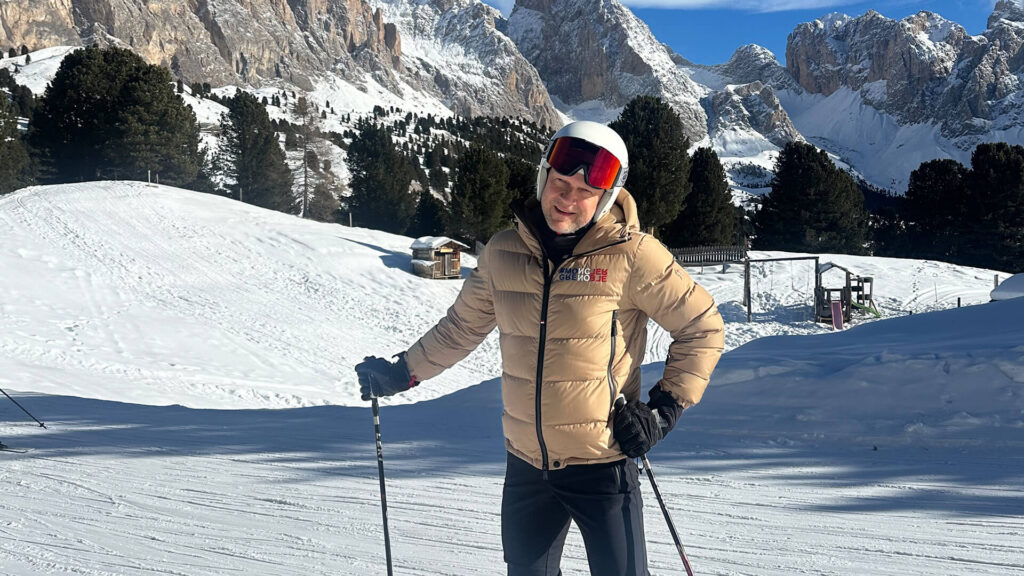
My favourite hobby is to ski. I try to get away to the mountains 2-3 times a year. I definitely prefer winter holidays a lot more than the summer holidays and would always choose the mountains over the beach!
Having worked closely with our CEO, Zoltan Petho, Ákos brings a unique blend of strategic insight and operational leadership to the conversation. After more than 17 years in management consulting with global firms such as Boston Consulting Group, Deloitte, EY-Parthenon and EY, Ákos recently transitioned into the world of digital banking to lead BinX Bank through its next phase of growth.
In this interview, Ákos reflects on building businesses from the ground up, the lessons learned over two decades in consulting, and why he believes the future belongs to specialists who can adapt quickly in an AI-driven world. Ákos is a self-confessed Formula 1 enthusiast and shares how a racer’s mindset - focused, competitive and driven - shapes his approach both in business and in life.
I’m Ákos Demeter, CEO and Board Member of BinX Bank in Hungary. I’ve spent more than 17 years in management consulting with Boston Consulting Group, Deloitte, EY Parthenon and EY before moving into neobanking nearly two years ago.
BinX is a relatively new digital bank with a setup comparable to Revolut. For most of my consulting career I have worked with large organisations. Towards the end however, I was looking for change and greater responsibility. Moving into banking gave me the opportunity not only to advise on strategy, but to take full responsibility for delivering it.
Launching the EY-Parthenon brand in Hungary stands out as a defining moment. I served as a Business Development Lead for many years. I think that building something from the ground up and seeing it succeed was a particularly proud moment.
Never look back, always look forwards.
It’s natural to reflect on what we could have done differently, but we can’t change the past. We can only learn from it. Progress comes from applying those lessons and focusing on what lies ahead.
I value sharp thinking and structured problem solving. I look for people who can grasp complexity quickly and get things right the first time. These were qualities that I’ve developed over the years in my consulting background so are highly desired when I am looking to hire new team members.
Equally important is mindset. I look for open-minded, positive individuals who approach challenges with constructive energy.
Artificial intelligence is fundamentally reshaping the landscape. In my view, it presents a greater threat to white-collar roles than blue-collar ones.
My advice is to stay close to change. Understand AI, experiment with it and look for ways it can enhance your performance but don’t rely on it solely. The global environment is unlikely to become more predictable in the near future, and we cannot forecast everything. Adaptability will be critical.
I believe the trend is clearly moving towards specialisation, particularly in white-collar roles.
When I began my career, generalists were highly valued but today, clients increasingly expect deep expertise. Being recognised as an expert in your field creates differentiation and long-term relevance.
Traditional banks are struggling because legacy systems often block innovation. Outdated infrastructure makes it difficult to move quickly and adapt to evolving technologies and customer expectations.
At the same time, challenger banks are gaining momentum rapidly. Their agility allows them to scale faster, which creates significant pressure for universal banks.
In Hungary, we operate in the B2B segment. With a population of around 10 million people and approximately 2.2 million customers banking with our main direct competitor, I see strong opportunity. The market is proven, and it’s one we intend to capture.
Outside of work, I am a passionate Formula 1 fan and would describe myself as a racer at heart. I enjoy go-karting and have played squash for more than 20 years.
For me, a racer’s mentality is not just about winning every time. It is about drive, focus and the constant desire to improve. Of course, I always want to win, but it is that competitive energy that fuels me rather than burns me out.

Research from the McKinsey Global Institute highlights the rise of what it calls “arenas of competition”. These are sectors that are growing faster, changing more rapidly and attracting more capital than traditional industries, which include AI, cloud computing, electrification, biotech, software and digital platforms.
Between 2005 and 2023, 12 such arenas have more than doubled their share of total global revenue, growing at around 14% per year, roughly three times the pace of non-arena industries. Looking ahead, 18 potential future arenas could generate between €27 trillion and €45 trillion in revenue by 2040, and between €1.9 trillion and €5.6 trillion in profit. These figures are converted from US dollars at approximately 0.93 EUR to USD. These numbers are not vague projections; they represent a significant portion of expected global economic growth over the next 15 years.
For boards and chief executives, the message is clear. Strategy alone is not enough. In these fast-moving markets, the leadership team can be the difference between success and failure. A single appointment can either accelerate growth, strengthen execution and enhance investor confidence, or it can slow progress and erode competitive advantage. In arenas where annual growth can be several times higher than the broader economy, the stakes are real and immediate.
In more stable sectors, it often makes sense to hire leaders from competitors, assuming that experience will transfer. That approach is far less effective in fast-growing arenas, where conditions are unlike anything in the past. A finance director who has spent a career optimising cost structures in a mature business may not be prepared for rapid expansion and high capital intensity. A chief executive experienced in steady annual growth may struggle when scaling an organisation at double-digit rates. What matters most is the ability to make decisions under uncertainty, adapt operating models quickly and lead teams through rapid transformation. Leaders who have navigated these conditions before, even in different industries, often bring the most relevant experience.
This requires a rethink of how executive search is conducted. Traditional approaches, which focus on job titles and direct competitors, can overlook candidates who are better suited to the real challenges of a market. Instead, the starting point should be an assessment of the business context, whether the market is stable or evolving, whether the organisation needs to maintain performance or scale rapidly, and what leadership qualities will succeed under those conditions. By framing searches this way, boards are better equipped to make appointments that align with strategic objectives rather than simply replicating past hires.
Cross-sector experience is particularly valuable. McKinsey’s data shows that in 2023 around 40% of the total market capitalisation in arenas came from companies that were small or non-existent in 2005. This demonstrates that value creation is rarely static and that incumbency does not guarantee success. Leaders who have scaled platform businesses, managed international expansion, navigated regulatory complexity, or integrated technology into traditional models often demonstrate skills that translate well across different arenas. For boards and investors, the key question is not just whether a candidate has industry experience, but whether they have succeeded in environments of rapid growth and change.
Appointments in high-growth arenas are not just recruitment decisions; they are strategic choices with a direct impact on performance and investor confidence. Boards must consider whether candidates can operate effectively where competitive pressures shift quickly, capital is intensive and revenue growth may be several times higher than broader market averages. In this context, executive search becomes a tool for strategic insight, helping organisations identify gaps, evaluate capability and uncover talent that can truly deliver.
At Friisberg, our role is to connect organisations with the leaders most likely to succeed in these fast-moving markets. We work to understand the competitive context, the pace of change and the ambitions of the business. We advise on the type of leadership that aligns with those realities and identify candidates whose track records demonstrate success in similar conditions. Importantly, we look beyond the obvious talent pools to ensure leaders are chosen for the challenges ahead, not just for their past roles.
Leadership choice in arenas of competition is not a minor decision. It has a lasting impact on outcomes, organisational direction and long-term success. As markets continue to evolve rapidly, the leaders organisations appoint today will determine whether they thrive tomorrow.
This week, we provide exclusive insights into the thinking of leading decision-makers from the Consumer & Luxury sectors.
Today’s guest is Florian vom Bruch, CEO of BUBEN&ZORWEG, the German luxury house renowned for its high-security safes, precision watch winders and bespoke storage and display systems for collectors worldwide.
The blend of technology, meticulous craftsmanship and design coming together to create true masterpieces is something very special. I also find the strategic and creative work on collections, limited editions and unique pieces highly inspiring, especially within the dynamic collaboration between designers, creatives, engineers, master craftsmen as well as sales and marketing experts.
Feeling the joy of clients throughout the design process, and especially once a piece is put into operation, is incredibly motivating. Knowing that we create something highly personal and lasting for our clients and often grow together in the process is a wonderful feeling.
In addition, working with our international retail partners and their clientele is deeply inspiring, as every product crafted in our manufactory tells its own unique story. Equally important is the very strong set of values within our community: trust, appreciation, teamwork and humanity - principles I personally hold in high regard.
I see four essential areas:
Manufacturers must create desirable, sustainable premium products that meet the highest standards in materials, technology and long-term value - ideally becoming an emotional companion for clients over many years.
Products must be commercially viable to produce, ensuring an attractive price‑performance ratio in global competition. A customer-focused, long-term service offering across all sales channels is also part of this.
Over the past decade, the landscape of omnichannel tools has changed dramatically. The future belongs to manufacturers that implement; a well‑orchestrated, brand‑aligned mix of global marketing and sales instruments. They should tap into the potential in major non‑European markets such as North America, Asia, the Middle East and India through tailored market strategies.
A reliable governance structure that serves the company’s needs is crucial. This includes finding the right balance between family leadership, professional management, strategic and operational committees, and where appropriate, external (financial) partners.
If German and European manufacturers succeed in managing all four clusters in an integrated, courageous way (for example through targeted use of AI) and with the maximum level of performance required in global competition, then we are, metaphorically speaking, like a perfectly tuned Formula 1 car and team = unstoppable.
A wonderful question. Fortunately, there are many things that give me energy and allow me to embrace my “high‑intensity job” as CEO of BUBEN&ZORWEG, now in my eighth year, with full passion.
Here is a small collection of my personal sources of energy: My wife and closest friends, nurturing old and new friendships, being in touch with inspiring people, Peloton, good coffee, fine food, nature and walks. I love to travel the globe to experience other cultures, including Sydney & Tokyo. I appreciate timeless architecture and furniture, my community of family business leaders, manufacturers and athletes, the photo memories displayed on my iPhone, and a beautifully crafted watch dial!
Most organisations still behave as though senior hiring works like every other kind of recruitment: A role is defined, an advert goes live, applications arrive then the strongest candidate is selected.
It is a tidy, logical model.
It is also almost entirely detached from how leadership talent actually moves.
Because the simple truth is this: your next CEO, Managing Director, or critical functional leader is very unlikely to be applying for your job. In most cases, they are not actually looking at all.
At early and mid-career levels, advertising works. There is a healthy population of active candidates exploring options, updating CVs, and responding to outreach, but at senior level, the dynamic is fundamentally different.
High-performing leaders are typically:
They are not scrolling job boards at 10pm, they are busy running businesses.
The Chartered Institute of Personnel and Development consistently reports that the majority of UK employees are “passive” rather than active jobseekers, and that this effect is significantly stronger at senior and specialist levels. In other words, the higher the responsibility and impact of the role, the smaller the pool of people actively applying.
At the same time, the Confederation of British Industry continues to cite leadership and skills shortages as one of the primary constraints on UK business growth.
Put simply, the people organisations most need are the least likely to knock on the door.
There is also a human factor that often goes unspoken - senior leaders do not move roles lightly.
By the time someone reaches executive or board level, career decisions are no longer about title progression or incremental pay. They are about:
Changing roles becomes a high-stakes decision, not a speculative one which means they rarely respond to generic outreach or public adverts.
Instead, movement happens through trusted conversations, a discreet call, a credible introduction and a thoughtful discussion about purpose and mandate, not just job description.
In many cases, the opportunity did not exist in their mind until someone they respect made it visible.
That is not recruitment marketing, this is advisory engagement.
Yet many organisations still default to the same process for leadership hiring as they use for volume recruitment: Post. Wait. Screen. Interview.
It feels efficient and fair, but structurally, and crucially, it excludes most of the actual market.
When you rely primarily on inbound applications, you are only accessing:
You are not systematically reaching the top performers delivering results elsewhere.
Over time, this creates a hidden bias because you are not choosing the best leader in the market, you are choosing the best leader who happened to apply. Those are very different pools.
Several trends are amplifying this dynamic in the UK.
First, demographic pressure: A significant proportion of senior leaders are approaching retirement age, particularly across infrastructure, industrial, utilities, and regulated sectors. The replacement pipeline is thinner than many boards expected.
Second, complexity: Leadership roles now demand broader capability than ever. Digital, regulatory scrutiny, ESG accountability, and international exposure are baseline expectations rather than differentiators.
Third, risk awareness: Boards are understandably cautious. The cost of a poor leadership hire can easily exceed one to two times annual compensation when disruption, delay, and replacement are factored in.
The result is a paradox. The roles are more important, but the talent pool is smaller. Yet many organisations still rely on methods designed for abundance rather than scarcity.
The most effective leadership hiring processes I see look very different and they start with a market view, not a job advert.
Before a role is even public, they ask:
It becomes proactive rather than reactive. Instead of waiting for candidates to self-select, the organisation deliberately goes out to meet the market, but not through mass messaging, through informed, high-trust conversations.
In practice, that often means:
By the time interviews begin, the shortlist is already composed of people who were not planning to move, but now see a compelling reason to consider it.
That is a very different starting point.
At Friisberg, this reality shapes how we work every day.
We rarely rely on who applies. We focus on who should be in the conversation.
Our work begins with understanding the market, the competitive landscape, and the leadership DNA that will genuinely move the organisation forward. From there, we engage people discreetly and thoughtfully, often leaders who had not considered a change until a credible opportunity was presented.
It is less about filling roles and more about unlocking access because at senior level, access is the advantage.
The organisations that recognise this tend to make better hires, faster, and with greater confidence. Not because they run a louder process, but because they reach parts of the market others simply never see.
So perhaps the better question for boards is not:
How many applications did we receive?
Instead it should be:
Did we actually speak to the best leaders available, or only the ones who happened to apply?
The answer to that question usually tells you everything.
Leadership decisions in Central and Eastern Europe are often portrayed as rational, measured and strategic. In reality, they are more frequently shaped by urgency, opacity and inherited assumptions. The region’s leadership markets are small, relationship-driven and rarely transparent, yet the stakes of getting leadership wrong have never been higher.
In this article, Group CFO and Bulgarian Managing Partner Nevena Nikolova explores why so many leadership decisions in CEE continue to be made with partial visibility and how the absence of real market intelligence quietly undermines succession, transformation and long-term value creation. Drawing on extensive regional market mapping, she explains why leadership optionality is shrinking, why familiar names keep resurfacing, and why organisations that fail to understand the true leadership landscape are making critical decisions in the dark.
Across CEE, an estimated 60 - 70% of senior leadership appointments are triggered by unplanned events rather than long term planning. Yet almost half of these appointments underperform or fail within 18 to 24 months. In most cases, this is not due to lack of capability, but because decisions are made with incomplete market insight.
Too often, the answer is shaped by assumptions rather than evidence. Familiar names resurface. Old networks are activated. Market opinion replaces market intelligence. In a region as interconnected and opaque as the Balkans, this is a fragile way to make decisions with long term consequences.
Leadership markets in CEE are thin and relationship driven. In many countries, the realistic pool of board ready CEOs or CFOs numbers fewer than 30 to 40 individuals. Market mapping repeatedly shows that the same 10 to 15 profiles circulate across multiple shortlists, reinforcing familiarity while quietly reducing optionality.
The most effective leaders are rarely visible and almost never actively looking. They move quietly, through trust and timing rather than open processes. Without a structured and current view of the market, boards are forced to operate with partial information.
This is where leadership market mapping becomes a strategic discipline rather than a support function. Properly done, it is not about preparing to hire. It is about understanding how leadership power, influence and mobility actually function across a region.
In CEE, public data tells only part of the story. Job titles often overstate or understate real authority. Informal influence frequently outweighs formal structure. In our regional mapping work, over one third of high impact leaders do not sit in formally top tier roles. Their credibility comes from regulatory knowledge, investor trust or operational control, making them effectively invisible to traditional search approaches.
The consequences of not having this view are subtle but significant. Boards conclude there is no talent when in reality, talent is misunderstood or mislabelled. Internal successors are dismissed without proper external comparison. In fact, more than 50% of internal leadership candidates in CEE are assessed without being benchmarked against the external market, leading to avoidable exits of high potential leaders.
Cross sector moves that could unlock growth are never considered because they sit outside familiar patterns. Unlike larger Western markets, the Balkans do not offer endless optionality. Leadership pools are narrow and overlapping. Without market intelligence, organisations recycle the same profiles while overlooking emerging leaders who operate below the surface.
The real value of leadership market mapping is optionality. It allows organisations to make decisions from a position of knowledge rather than urgency. Organisations with an active and current leadership market map reduce decision time by 30 to 40% when a leadership event occurs. More importantly, they make better decisions across hiring, retention and internal development, because they understand the full leadership landscape before pressure sets in.
Many boards spend months debating leadership questions without ever seeing the complete leadership market. This is equivalent to setting strategy without understanding the competitive environment.
In volatile regions like CEE, leadership insight cannot be static. Markets move. Alliances shift. Credibility travels faster than formal announcements. Organisations that track leadership dynamics over time consistently make better leadership decisions.
The question is no longer whether leadership decisions matter. The question is whether they are being made with insight or with assumptions.
Because in leadership, the cost of being wrong rarely shows up immediately. Over a 3–5 year horizon, a misjudged leadership appointment typically represents multiple points of EBITDA, delayed transformation and irreversible talent loss. By the time the impact becomes visible, the market has already moved on.
We are delighted to feature Managing Consultant Olli Kilpi from our Helsinki office in this edition of Friisberg’s Employee Spotlight series. Olli joined the Friisberg family in August 2025, bringing with him more than 25 years of leadership experience across FMCG, the restaurant business, and retail. With an extensive international background including 15 years living outside Finland, Olli has worked with global brands and played a key role in the internationalization of two Finnish companies.
Prior to joining Friisberg, he served as CEO of a fast-growing Finnish retail company operating in Finland and Germany, and spent 13 years with McDonald’s, most recently as Managing Director for Norway then Sweden. At Friisberg, Olli focuses on senior-level executive searches across organizational functions, with his particular expertise in B2C industries.
I’m a newly appointed Managing Consultant for Friisberg Helsinki, in this role I’m in charge of the strategy and quality of our executive search team - I’m lucky to have a strong team who I am proud to represent.
I really enjoy meeting lots of different talented people and enjoy discussing the challenges and opportunities that companies face. I also enjoy understanding the values and cultures of different companies.
It’s rewarding to talk with talented executives to build an image of what motivates them, what kind of leadership styles and team roles they bring to the table and to identify their particular strengths that can help the companies grow.
One key trend is the tremendous volatility in different markets. This requires new skills from executives: resilience, clarity, ability to lead change, empathy. In particular - in the age of AI, leadership requires boldness to evaluate the impact of modernizing the business model on all levels. This creates uncertainty and even fear in organizations. Visibility and empathy of leadership is needed, as well as clarity of communicating the direction. In many cases, a manager with a ready and fixed agenda is not the ideal candidate. Instead, adaptability and agility are characteristics of a leader that can navigate the best in the era of uncertainty.
I’d like to start by saying, that there’s not really a single winning quality for all purposes. Instead, we must understand the client. What’re the values and culture that exist in the company, and do they want to change the culture to a certain direction? What phase is the company in? Are they looking for a turnaround leader or perhaps someone with a track record of building sustainable growth? What does the team look like, are there particular personality types that are missing in the team that would make the decision making more dynamic and the discussion richer?
Having said that, nothing beats attitude. It is hard to teach a winning spirit and willingness to challenge yourself, constantly learn new things and aim for a higher performance. I always love to see behaviour, which demonstrates a strong winning spirit!
In the end, it is always about the people. You can’t win without the right team around you. No matter how good your product or service is, it is not sustainable without the right people. Invest in them, believe in them and grow with them.
McDonald’s taught me so much that I can use in my current role. The McDonald’s leadership is a beautiful combination of long careers, people that have grown within the company, and new hires, people that bring new ideas and challenge the existing. We used to say that we are in ‘the people business’, the co-operation between the franchisees (and their staff), the corporate employees and the suppliers was the key to success. During my 13 years in the company, I learned a lot about building winning teams, evaluating and hiring talent and developing teamwork. McDonald’s really invests a lot in people. The company also invested in me, and I was privileged to participate in world-class leadership development programs.
The experience that I am most proud of was how we, under my tenure as a Managing Director, together with our franchisees, turned the business around in Norway and created and executed a new strategy that led to a sustainable profitable growth. It would not have been possible without the right people, in all areas of the business, that understood the vision, believed in the strategy and executed with excellence. This required also recruiting new talent. We brought in executives that had the skills and seniority required to lead the change and elevate our standards, but they were also a nice cultural fit. That experience confirmed my belief that winning in the end is all about having the right people around you.
I have a Masters degree from the School of Economics in Helsinki, major in Marketing and minor in Finance. I have also conducted exchange studies at the HEC in Montreal and La Sorbonne in Paris. This has given me a solid base as I grew within the ranks in sales and marketing, 15 years after my graduation I took my first role as a Managing Director of a market. Finally, prior to starting a new career as an executive search consultant, I was Group CEO of a fast growing and internationally operating Finnish company, backed up by Private Equity.
In my opinion, academic learning has of course given me a good theoretical thinking of how to approach different situations. I still regularly quote Philip Kotler. And as I discuss with my son, who is a second-year student at the School of Economics, majoring in Finance and Investment, I notice that I still remember the courses in Economics as well as Finance and these courses have helped me both in my work as a Managing Director, and to a certain extent also in managing my personal finances!
But I mostly value the learning that came throughout my studies. The longer-term learning of how to acquire information, how to process it, analyse it and develop opinions. And how to debate and defend the different perspectives from the data, all to form better conclusions and more mature decisions. This way of being critical to available information, ability to ask questions and process to form opinions was something that I continued to develop seamlessly after graduation at my first employer Procter&Gamble. P&G was an excellent continuation to real life after an academic learning.
You need to load content from hCaptcha to submit the form. Please note that doing so will share data with third-party providers.
More InformationYou need to load content from reCAPTCHA to submit the form. Please note that doing so will share data with third-party providers.
More InformationYou need to load content from reCAPTCHA to submit the form. Please note that doing so will share data with third-party providers.
More InformationYou need to load content from reCAPTCHA to submit the form. Please note that doing so will share data with third-party providers.
More InformationYou need to load content from Turnstile to submit the form. Please note that doing so will share data with third-party providers.
More Information