At Friisberg, culture is not an abstract idea. It is something we experience every day in how we work, collaborate and support our clients. In our Culture Factor series, we explore how local contexts shape professional behaviour and organisational success.
Although our office is based in Amsterdam, our work extends across the country, including Oss, and is led by Maarten van de Sande, who heads Friisberg’s Dutch practice. From this base, we support organisations operating at the heart of the Netherlands’ most influential industries.
The Netherlands has a strong, open and internationally connected economy. Services account for more than three quarters of national output, and the country plays a central role in European and global trade. Key industries include logistics and infrastructure, agri food and life sciences, high tech systems and materials, energy and sustainability, and financial and professional services.
The Port of Rotterdam and Schiphol Airport position the Netherlands as a gateway to Europe, while world leading agricultural exports and advanced semiconductor manufacturing underline the country’s reputation for both scale and innovation. These sectors require leaders who can operate in complex ecosystems, balancing efficiency, innovation and collaboration.
Dutch business culture is known for its direct communication style. Clarity is valued over formality, and honest feedback is seen as constructive rather than confrontational. In practice, this enables faster alignment and reduces ambiguity in decision making.
This directness is closely linked to a strong sense of pragmatism. Ideas are expected to lead to action, and discussions are grounded in facts and feasibility. This mindset supports industries such as logistics, infrastructure and energy, where execution and reliability are critical.
Transparency and high ethical standards are also central to Dutch working culture. Open dialogue, clear expectations and integrity in leadership contribute to trust at both organisational and societal level. These values align closely with Friisberg’s approach to executive search and advisory work, where credibility and long-term impact are paramount.
While discussions are open and direct, decisions are rarely made in isolation. Consensus building, encouraging input from multiple stakeholders and shared ownership of outcomes are regarded highly. Although this can take time upfront, it leads to durable decisions and strong commitment during implementation.
Hierarchy exists, but it does not dominate interactions. Leaders are expected to be accessible, well prepared and open to challenge. Expertise and contribution often matter more than title.
At Friisberg, this influences how we assess leadership potential. We focus on leaders who can engage others, listen effectively and lead through credibility rather than authority alone.
Dutch organisations combine flexibility with a high degree of structure and planning. Deadlines are taken seriously, agreements carry weight and reliability is a key marker of professionalism. This cultural trait supports the Netherlands’ reputation as a dependable place to do business and underpins long term partnerships.
For international clients operating in or from the Netherlands, this predictability creates a strong foundation for growth and collaboration.
In the Netherlands, work–life balance is widely recognised as a key driver of sustainable performance. Productivity is assessed by outcomes rather than hours worked, and flexible working practices are firmly embedded in the culture. Working hours are clearly protected, and international companies operating in the Netherlands are expected to respect established business hours. Notably, around 50% of employees work part-time, reflecting a strong societal commitment to balancing professional and personal life.
This respect for personal time supports employee wellbeing, sharpens focus, and fosters long-term engagement. This cultural norm is especially valuable in knowledge-driven industries such as technology, life sciences and professional services, where creativity, critical thinking and sustained cognitive performance are essential for success.
As a highly globalised economy and home to many international organisations, the Netherlands has a naturally international mindset. All Dutch professionals speak English very well and many also master a second language. In many cases, English is even the company language. Multicultural teams are common, and inclusivity and diversity are increasingly recognised as strategic advantages rather than social initiatives.
Dutch organisations value diversity of thought and background, particularly in leadership teams. Friisberg supports clients in building inclusive leadership structures that reflect the markets and societies in which they operate.
Led by Maarten van de Sande, Friisberg partners with organisations across the Netherlands’ core industries, combining local cultural understanding with global expertise.
We support clients through executive search and leadership appointments, identifying leaders who can navigate transformation while aligning with organisational values and culture. We advise on organisational and cultural development, helping leadership teams align strategy, structure and behaviour. We also work closely with clients on succession planning and talent strategy, ensuring leadership continuity in fast evolving sectors.
Given the Netherlands’ role as a gateway to Europe, we regularly support cross border growth and international expansion, helping organisations understand local leadership expectations and cultural dynamics.
From our work in Amsterdam and beyond, one insight stands out clearly. In the Netherlands, culture is not a soft concept, It is a strategic advantage. Directness, collaboration, pragmatism & balance shape how organisations lead, innovate and perform.
At Friisberg, understanding and working with these cultural dynamics allows us to help clients build organisations where people and performance thrive together. That is the Culture Factor in action.
Note: These insights reflect common patterns observed in professional settings. Every individual and organisation is unique, and no culture can be defined in absolute terms. Our aim is to highlight trends that international leaders may encounter when working across borders, and to share how Friisberg helps clients navigate these differences with respect and effectiveness.
We spoke to our Managing Partner Dorota Cagiel based in New Delhi who shared her market insights into Indian Business culture.
Expanding into India involves more than market research or regulatory compliance. Success depends heavily on understanding the country’s cultural and organisational dynamics. Business in India often operates within a hierarchical, trust and relationship-driven context where decision-making can follow the hierarchy and respect for seniority remains deeply embedded. Communication is polite and indirect, and negotiations often involve building trust and relationships before final decisions are made.
In India around 60% of employees are on permanent contracts, while average tenure is 6.5 years, reflecting a mix of stability and project-based employment. Approximately 50% of leaders are perceived as behaving consistently with stated organisational values, and 48% of employees feel the culture reflects these values. Diversity, equity and inclusion policies are present in around 40% of Indian companies, while 55% of organisations have formal employee wellbeing programmes, though implementation varies widely.
Because of this complexity, having local insight helps international companies avoid missteps, build appropriate glo-cal people strategies, and adapt leadership style to local realities.
Hierarchy and authority remain central in many organisations, with senior executives holding most decision-making power. Formal titles and indirect communication are common, especially during early interactions, and meetings often begin with relationship-building before moving to formal discussion. Workforce fluidity is higher than in many European markets, and permanent employees often coexist with temporary staff.
Business relationships place strong emphasis on personal rapport, trust and long-term collaboration. Teamwork, loyalty and group cohesion are highly valued. Balancing traditional hierarchical norms with modern, agile management practices is a challenge. Organisations are increasingly investing in leadership alignment and employee development to strengthen the engagement.
Our India operations are supported from the New Delhi office with the team led by Dorota Cagiel. The team provides local expertise to interpret how Indian culture, from hierarchical structures to workforce flexibility and efficiencies as well as engagement, plays out in daily business.
Friisberg helps international clients align corporate governance, find top talent, grow leadership teams and train international and cross-cultural teams. The team also designs engagement, performance and retention practices suitable for India’s business environment. They advise on leadership interactions to respect local norms while remaining effective and bridging with foreign parties. By establishing credibility and networks, Friisberg enables sustainable operations and long-term success in India.
India presents vast opportunities and success requires cultural understanding, flexibility and strategic adaptation. With Friisberg’s local presence in New Delhi, under Dorota Cagiel’s leadership, international companies can navigate India’s workforce dynamics, cultural complexities and people challenges to build high-performing organisations.
Note: These insights reflect common patterns observed in professional settings. Every individual and organisation is unique, and no culture can be defined in absolute terms. Our aim is to highlight trends that international leaders may encounter when working across borders, and to share how Friisberg helps clients navigate these differences with respect and effectiveness.
UK leaders often assume that European employment regulation stops at the Channel.
This one does not.
The EU Pay Transparency Directive will fundamentally change how pay is discussed, disclosed, and challenged across Europe by June 2026. While the UK is outside the EU, the implications for UK-based organisations are already landing in boardrooms, hiring conversations, and candidate expectations.
This is not a theoretical future issue, it is a live leadership and talent risk.
By June 2026, EU member states must implement laws that introduce:
The intent is clear: reduce pay inequality by removing opacity from both recruitment and reward decisions.
Is this a good initiative? The consensus is broadly yes, with practical caveats. The EU Pay Transparency Directive is widely viewed by policymakers, academics and many employers as a meaningful step towards closing unjustified pay gaps and strengthening trust in pay systems. Greater transparency reduces information asymmetry, supports fairer negotiations, and forces organisations to confront structural inconsistencies that often sit unnoticed for years. Where opinion becomes more cautious is around implementation: employers are rightly concerned about administrative burden, inconsistent application across countries, and the need for robust job architecture before transparency is introduced. In short, the intent is strongly supported; the success depends on preparation. Organisations that approach pay transparency strategically see it as a cultural and leadership opportunity, while those that treat it as a compliance exercise risk exposure rather than progress.
Even without direct legal force in Great Britain, the impact is real in three practical ways.
1. UK companies with European operations: Any organisation employing people in the EU will need to comply locally. In practice, that often drives group-wide changes to job architecture, levelling, pay bands, and hiring processes. Fragmented approaches become very difficult to defend.
2. Candidate expectations are shifting: Once pay ranges become standard across European markets, opacity in UK hiring starts to feel outdated, particularly at senior levels and in scarce skill areas. Transparency increasingly signals confidence and fairness, not risk.
3. The comparison bar is rising: UK employers with 250+ employees already report gender pay gap data annually. The EU approach goes further, extending transparency into recruitment and employee access to pay information. Boards, investors, and employees will inevitably compare UK practice against this higher benchmark.
From my perspective, this is not a reward team problem, it is a leadership credibility issue.
If an organisation cannot clearly articulate:
then pay transparency will expose inconsistency fast - and inconsistency erodes trust, retention, and hiring outcomes.
The strongest leaders are acting before regulation forces them to.
They are:
At Friisberg, we work with clients across the UK (and through our local European offices) to navigate this shift with confidence.
That includes:
Pay transparency is not coming to “disrupt” good organisations, it is coming to reveal whether clarity already exists.
With 32 offices across 22 countries, we asked our teams to share their holiday traditions. From Bulgaria to New Delhi, their responses reveal a striking common thread: across cultures, winter is a season to create light, connection and energy through rituals, food and community.
Across the Alps and Rhine, French families, particularly in Alsace and Moselle, mark Advent with candles, bake traditional bredeles and visit Christmas markets that fill towns with light. The main celebration on 24 December revolves around a family meal and gift-giving, surrounded by illuminated streets and glowing lanterns. In Germany, Christmas markets transform cold town squares into warm communal spaces, where mulled wine, roasted almonds and music provide comfort and shared joy.
In Bulgaria, Christmas Eve begins with a vegetarian supper featuring symbolic dishes: grains for continuity, beans and nuts for health, honey for sweetness, and bread baked with a hidden coin for luck. The badnik, a ceremonial log, is burned for warmth and blessings, while children practise survakane, tapping adults with decorated cornel branches and reciting blessings. Before sunrise on Christmas Day, groups of Koledari sing ritual songs, and in some villages masked Kukeri dancers ring bells and leap through fire to chase away negative spirits and awaken new energy.

This year, Ukrainians are celebrating Christmas with Europe on 25th December rather than on the 7th January, a symbolic choice that reflects our shared values and cultural direction. Ukrainian New Year traditions remain deeply rooted. We place a Didukh, a sheaf of wheat symbolising our ancestors, near the festive table. Families prepare kutia, holubtsi and varenyky, and always leave a place for those who cannot come home. This year, many chairs remain empty because someone is defending Ukraine. We even joke that we have never been closer to our ancestors. While the world prepares fireworks and LED decorations, we mark the New Year with the most authentic “traditional lighting” – candles during blackouts. It is a dark joke, yes, but one born from resilience, not despair.
Traditions continue, even during power cuts, in shelters, and with unstable internet. Christmas follows the winter solstice, the longest night of the year, after which days begin to grow longer. Light always triumphs over darkness. Our ancestors celebrated this with rituals, carols, and warmth shared around the table. Today, we feel it anew: even when the city goes dark, a single candle can still illuminate the room, a reminder that darkness is temporary.
When one flame becomes the centre of the celebration, it shows what New Year truly means here: family, culture, and the enduring belief that even the longest night will end.
In Poland, the first star in the sky signals the start of Christmas Eve. Families share opłatek, exchange blessings, and sit down to twelve meatless dishes, leaving an empty place at the table as a gesture of hospitality and inclusion.
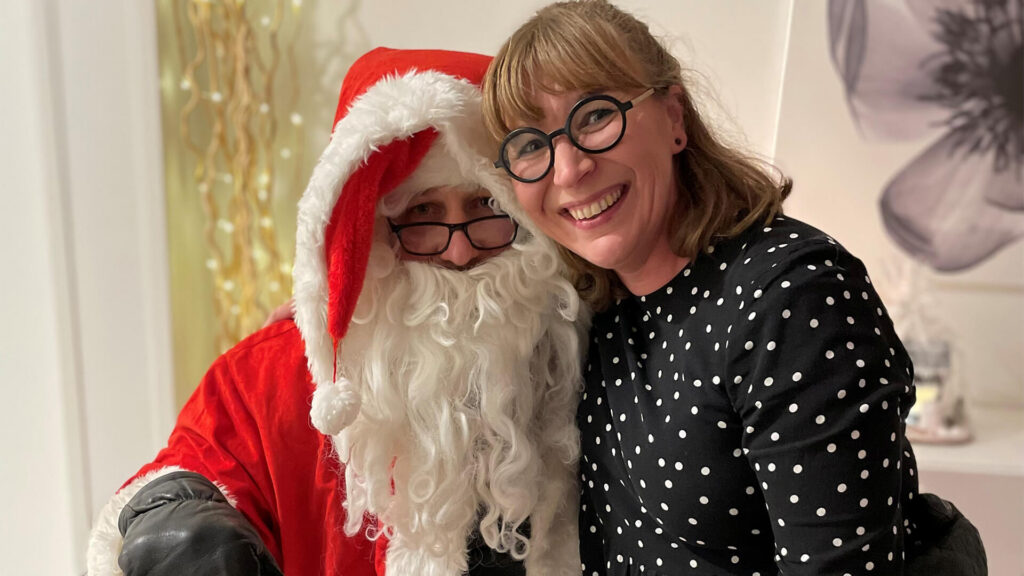
Further north, in Finland, the season is quieter and more reflective. Families gather at home, enjoy traditional foods passed down through generations, listen to melancholic Christmas music, and celebrate Santa Claus as a symbol of trust and goodwill. Saint Lucy’s Day also brings symbolic light during the polar night, highlighting the importance of hope and warmth.
In India, Christmas transcends religion, celebrated across states from Goa and Kerala to the North East and major cities. Midnight masses, family gatherings, festive street markets, bakeries overflowing with seasonal treats and shared meals turn the season into a nationwide celebration of togetherness.
In the United Kingdom, England balances ritual and humour. Christmas cards, table crackers and Stir-Up Sunday pudding-making combine tradition and shared silliness, while in Scotland Hogmanay is a full-scale celebration of fire, music and community. Torchlight processions, shortbread exchanges and even the Loony Dook, a New Year’s Day plunge into the freezing sea, show a unique blend of bravery, camaraderie and festive spirit.
In Lithuania, Advent is a time of reflection and anticipation. Families light one candle each Sunday, and Christmas Eve, Kūčios, remains the season’s most significant celebration, marked by a symbolic dinner, shared blessings and family connection.
Finally, in the Netherlands, December begins with Sinterklaas on 5 December, a children’s festival featuring gifts, sweets such as pepernoten and chocolate letters, and playful poems. Christmas itself is centred on family, candlelight and multi-course meals, often accompanied by handmade ‘surprises’ that emphasise thoughtfulness over extravagance.
Across these diverse traditions, some themes are universal. Light is used to dispel darkness, food carries symbolic meaning, movement and ritual release energy, and inclusion is actively practised through gestures such as empty chairs, door-to-door visits and shared celebrations. Winter, rather than a season to endure, becomes a period organised around ritual, community and continuity.
Friisberg’s teams show that even in the coldest, darkest months, connection, creativity and care can turn tradition into energy, and shared experience into resilience.

Expanding into Bulgaria requires more than understanding the market, it demands insight into organisational culture and people dynamics. In Bulgaria, 55% of leaders and 52% of organisational culture are perceived as authentic and aligned with stated values, highlighting the importance of cultural credibility in business success.
Bulgarian companies are actively developing employees whose behaviour reflects organisational culture, demonstrating a strong focus on aligning leadership and workforce practices. At the same time, 55% of businesses have a DEI policy (compared with 91% in the UK and 72% in Romania), and over 65% have formalised wellbeing policies, showing growing recognition of inclusion and employee support.
Workforce stability remains strong: 81% of employees are on permanent contracts, and average tenure is 9.2 years. Younger professionals are driving cultural change, with 69% of 18-29 year olds supporting more women in senior roles.
Bulgaria blends tradition with evolving cultural expectations. Understanding these dynamics is crucial for international businesses, and Friisberg’s local expertise ensures organisations can navigate them effectively.
Bulgarian companies often retain clear hierarchical structures with respect for senior positions. Input from teams is valued, but final decisions tend to sit with senior leaders. This aligns with assessments of traditional corporate culture in the country.
A national working conditions survey found that 81% of Bulgarian employees are on permanent contracts, and the average tenure in the same organisation is around 9.2 years.
This reflects expectations of stability and long-term employment relationships, which can differ from markets where job mobility is higher.
A 2025 study reported that only 51% of respondents in Bulgaria believe their organisational culture fully supports their business goals.
Between 54% and 72% of companies say they are actively trying to improve organisational culture.
In Germany and Bulgaria, expectations for correspondence between leadership behaviour and real culture, and between culture and stated values, are high. The study found that 55% of leaders and 52% of organisational culture were perceived as authentic and aligned with stated values.
By contrast, only 9% of respondents in Germany believe their organisation hires employees whose behaviour fully aligns with the culture, and only 8% feel that the development of such people is fully encouraged. In Bulgaria, however, the largest number of respondents give their organisation the highest rating for developing employees whose behaviour aligns with organisational culture.
This highlights that in Bulgaria, cultural alignment and employee development are perceived as more actively supported than in some other European markets, making local insight especially valuable for international companies.
In a study of 708 employees, around 20% reported frequent workplace conflict.
In broader surveys, 29.3% of employees said they were completely satisfied with working conditions, while 43.5% were fairly satisfied.
Wellbeing policies are widely formalised in the region: the UK, Romania, and Bulgaria all have over 65% of organisations with formalised wellbeing policies. However, implementation can be inconsistent, particularly in the United Kingdom. Germany lags behind both in terms of the existence of policies and the consistency between behaviour and organisational intentions.
In Bulgaria and Romania, organisations are often more innovative in their approach, offering additional benefits and flexible practices to support employees. This confirms that Bulgarian businesses are increasingly recognising the value of wellbeing and employee support initiatives.
Social attitudes are also evolving. A national survey found that 61% of Bulgarians believe there should be more women in senior business roles, rising to 69% among people aged 18 to 29.
Diversity, equity and inclusion (DEI) policies are less widespread in Bulgaria compared with some other countries: 55% of businesses in Bulgaria have a DEI policy, compared with 91% in the UK and 72% in Romania. This suggests that while inclusion is gaining attention, there is still significant room for growth and international companies can play a role in strengthening DEI initiatives.
This indicates that younger professionals increasingly welcome modern leadership styles, inclusive workplace cultures, and structured DEI and wellbeing approaches.
Bulgarian workplaces blend traditional hierarchy with modern expectations. Friisberg helps leaders understand when formality is expected, when informal communication is appropriate and how to adapt leadership styles to fit local norms.
With high rates of permanent employment and long tenure, employee loyalty and stability matter. Friisberg helps international companies structure roles, communication and engagement strategies that align with these expectations.
Since only around half of companies feel their culture supports strategy, Friisberg provides practical guidance on aligning values, behaviours and leadership expectations to create cohesive teams.
The insights that 55% of leaders and 52% of organisational culture are aligned, and that Bulgaria scores highest in developing employees whose behaviour aligns with the culture, underline why leadership behaviour, cultural authenticity, DEI, wellbeing, and employee development are critical in Bulgaria.
Face to face communication and trust building remain important in Bulgaria. Friisberg’s on the ground presence ensures that new entrants develop the relationships needed to operate effectively.
Bulgaria offers strong opportunities, but business success depends on understanding how people work, communicate and build trust. With Friisberg’s local expertise, organisations gain more than market insight, they gain a partner who understands the cultural context that determines long term success.
Note: These insights reflect common patterns observed in professional settings. Every individual and organisation is unique, and no culture can be defined in absolute terms. Our aim is to highlight trends that international leaders may encounter when working across borders, and to share how Friisberg helps clients navigate these differences with respect and effectiveness.
With Friisberg UK in London, Birmingham and Edinburgh, our end-of-year conversations naturally reflect a blend of English and Scottish traditions. The result is a December full of shared stories, gentle teasing and the occasional debate about whether shortbread counts as breakfast.
Here is a brief cultural tour of the season from our side of the Channel, combining well-known customs with some of the lesser-known rituals that our international colleagues often enjoy discovering.
England approaches Christmas with sentiment, structure and just enough chaos to keep it interesting.
England sends astonishing numbers of Christmas cards. This tradition stretches back to 1843, when Sir Henry Cole, a civil servant and early advocate for the modern postal system, commissioned the first commercial Christmas card. His aim was simple: encourage the public to use the newly introduced Penny Post - and it worked spectacularly. The idea spread quickly, becoming a national habit rooted in courtesy, connection and the very British fondness for polite correspondence. Even in a digital age, the ritual still carries cultural weight.
No English table is complete without crackers and every participant ends up in a flimsy paper crown, united briefly in colourful humiliation. Crackers are one of the most recognisable features of an English Christmas table, complete with a tiny toy and a joke so terrible it becomes a bonding exercise. The tradition began in the 1840s with a London sweet-maker named Tom Smith, inspired by the cracking sound of logs on a fire, wrapped his sweets in paper with a small explosive pop. Crackers appealed to something distinctly English: shared silliness, gentle theatricality and the idea that everyone, from grandparent to guest, should look equally ridiculous for one meal.
The Christmas pudding is one of England’s most iconic festive dishes – it is dense, dark, full of spice and fruit, and it arrives at the table with ceremony, often flaming dramatically in brandy. Its origins go back to medieval “plum pottage” which was a hearty mixture of meat, dried fruit and spices served at feasts, but over the centuries, the meat vanished, the fruit increased and the recipe slowly evolved into the sweet, rich pudding we know today. What keeps the tradition alive is not just the taste, but the ritual: families gather on Stir-Up Sunday to mix the ingredients, each person taking a turn to stir clockwise and make a wish. Coins or charms are sometimes hidden inside, meant to bring luck to whoever finds them (as long as they don’t break a tooth).
Come rain, frost or a determined gale, everyone goes for a long walk on 26 December. The purpose is fresh air, guilt management and making space for leftovers. Dogs consider it the highlight of their holiday.
Scotland treats New Year with the same enthusiasm that England reserves for Christmas and the result is a season of symbolism, warmth and impressive stamina.
Fireworks, music, ceilidhs and crowds that stay cheerful in freezing temperatures mean that Hogmanay is not just an evening, it is an experience.
In Edinburgh, the celebrations begin long before the 31st with the famous torchlight procession winding through the city, thousands of people carrying flames through historic streets that glow with fire and tradition. The entire city becomes a stage set, with crowds singing, hugging and dancing in streets that should, by all logic, be too cold for any of those activities.. Hogmanay here is not simply the turning of the year, it is a declaration of optimism, community and collective stamina.
This tradition has deep roots in Scottish folklore, in fact it dates back to ancient Celtic and Viking customs that viewed the threshold of the home as a powerful, symbolic boundary. The characteristics of the first visitor were believed to influence the household’s luck for the year ahead and dark hair became particularly favourable after Viking times, when the sudden arrival of fair-haired strangers at your door rarely boded well! Today, the tradition is embraced with far more warmth (and far less danger), but the symbolism endures. The first-footer brings prosperity, comfort and good cheer, making it one of Scotland’s most enduring and charming New Year rituals.
Scotland’s tradition of plunging into the freezing North Sea on New Year’s Day is legendary - it is bold, bracing and undeniably questionable. What surprises us most is that Lorri Lowe, our UK Managing Partner, has done the Loony Dook many times. Not once, not “just to see what it’s like”, but many times. Given that Lorri is known across Friisberg for her stilettos, designer outfits and long hair, the idea of her voluntarily entering the North Sea feels almost folkloric in itself. This is a woman who will quite happily take a taxi to avoid a walk in the rain, yet has repeatedly marched into icy water. The contradiction is, somehow, entirely on brand.
Throughout December, beautifully presented shortbread appears in offices, homes and unexpected places. It is more than a biscuit, it is a cultural expression of warmth, generosity and a deep respect for proper baking. Shortbread’s status in Scotland runs deep with its origins dating back to medieval oat-and-butter biscuits that later evolved into the rich, crumbly recipe we recognise today. Because butter and sugar were once expensive luxury ingredients, shortbread became a celebration food, baked only for Christmas, Hogmanay and weddings. The tradition endured so offering shortbread is still seen as a gesture of hospitality and good fortune - it is, quite literally, Scotland’s way of sharing sweetness and prosperity.
When Friisberg hosted its conference in Edinburgh earlier this year, the team experienced Scottish tradition first-hand. The ‘piping in’ set the tone instantly, and the ceilidh that followed became an unforgettable highlight - watching colleagues attempt reels with varying levels of rhythm and enthusiasm proved once again that Scotland knows exactly how to bring people together. The atmosphere was warm, joyful and every bit as spirited as the culture it represents.
We wish our Friisberg colleagues and clients a season filled with warmth, reflection and exactly the right balance of crackers, ceilidhs and cold-water bravery.
When Friisberg supports clients in acquiring Turkish businesses, or when we audit management teams as part of integration or executive search processes, one question arises repeatedly, “What defines Turkish business culture?”
Externally, Turkey is often viewed as a uniform system. Its business environment includes both locally owned, often founder- or family-led organisations and multinational corporations that operate according to their own global cultures.
This mix is shaped by historical traditions, European economic integration, and one of the youngest workforces in Europe. These elements create a commercial landscape that is relationship-driven, fast-moving, entrepreneurial, and highly adaptive. The experience varies depending on the type of company involved.
Below, Kıvanç Ersöz, from our office in Istanbul, shares the cultural insights international leaders most often encounter.
Many Turkish companies, especially local ones, maintain clear hierarchies. Seniority and titles are respected, and leaders are expected to be visible, decisive, and protective of their teams. Leadership is also personal - managers are expected to show genuine interest in employees' wellbeing, and a distant or overly formal manager is usually seen as disconnected.
Important distinction:
Local companies often revolve around a central "boss" figure whereas multinational companies follow global processes, policies, and leadership structures which usually override local habits.
In Turkey, trust comes before business. Meetings often begin with personal conversation about family, background, or mutual contacts, so what may seem unrelated to foreign visitors is often an essential step in building rapport. Once trust is established, cooperation tends to move quickly and with strong commitment.
In multinational firms, global procedures and governance frameworks reduce, though do not remove, the emphasis on personal rapport.
Communication is often indirect. Instead of saying “no” directly, people may say “Let’s think about it,” or “It might be difficult,” which typically signals disagreement or the need for alignment. Emotions are expressed openly, but usually in a way that preserves group harmony.
Flexibility is also a distinctive strength. Economic shifts and an entrepreneurial environment have made Turkish professionals highly adaptable and quick in their responses.
Local companies often rely on strong, centralised leadership. Decisions can be very quick, and priorities may change rapidly. In multinational organisations, global structures and governance rules lead to a more systematic approach, and while this can feel slower, it provides consistency and alignment across regions.
Because of these differences, leaders entering the Turkish market should understand the type of organisation they are joining. Moving from a multinational culture to a local, boss-driven environment can be challenging, particularly for executives used to structured processes. Expats working inside multinationals typically adjust more easily since they remain in a familiar corporate culture.
Extended availability is common in many local firms, and responsiveness outside standard working hours is often seen as a sign of commitment. Younger professionals, especially in multinationals and the technology sector, increasingly push for more balance and flexible working models.
Team cohesion is valued. Colleagues often socialise together, and personal and professional relationships overlap, so once trust forms, loyalty to leaders and organisations can be very strong.
Foreign investors and integration teams often find indirect communication, the emphasis on personal relationships, and rapid changes in priorities challenging. Centralised decision-making and expressive discussions can also feel unfamiliar.
At the same time, many of these characteristics turn out to be advantages. Turkish organisations often excel in adaptability, entrepreneurial thinking, commitment once trust is established, and speed of execution. The country also benefits from a young, educated, and ambitious workforce, with more than half the population under 45.
At Friisberg, we support leaders navigating cross-border complexity through management audits, executive search, integration projects, and cultural alignment work. We help foreign investors understand both local and multinational norms, support Turkish leaders entering global corporate environments, and guide executives as they move between these very different systems.
In a market where trust, agility, and relationships strongly influence performance, cultural intelligence is a strategic advantage.
These insights reflect common patterns observed in professional settings. Every individual and organisation is unique, and no culture can be defined in absolute terms. Our aim is to highlight trends that international leaders may encounter when working across borders, and to share how Friisberg helps clients navigate these differences with respect and effectiveness.
ithuania’s business culture continues to evolve at high speed, shaped by three decades of transformation, global integration, and the rise of new growth sectors. Through our work across Friisberg’s Lithuanian office, and in comparison, with other markets, we observe a culture that blends ambition, adaptability, and a growing international mindset.
While generational differences remain visible, the overall direction is clear: Lithuania is moving from hierarchical to collaborative, from cautious to opportunity driven, and from local to global in both expectations and capability.
Leaders in Lithuania share a strong sense of responsibility, discipline, and performance orientation. Younger leaders, many educated or trained internationally, tend to favour agile, participative, and innovation-driven approaches. In contrast, older or more traditional sectors retain elements of hierarchy, predictability, and controlled risk-taking.
The startup ecosystem, now complemented by thriving sectors beyond fintech and shared services (including deep tech, cybersecurity, manufacturing modernisation, and life sciences), is accelerating a widespread shift towards speed, experimentation, and global ambition. Today’s emerging leaders are fast, motivated, highly educated, and ready to take bold steps to scale businesses internationally.
Communication in Lithuania is typically direct, efficient, and task-focused. Small talk plays a role but remains secondary to purpose and written communication is valued for clarity and accountability.
Silence appears in interactions, reflecting a slightly Northern reserve and comfort with pauses, but it is not strong enough to be regarded as a defining cultural trait. Increasingly, we observe more open dialogue, constructive challenge, and cross-functional collaboration, especially in modern or internationally oriented environments.
Despite this openness, the results orientation remains pronounced: many professionals hold themselves and others to high standards, sometimes leaning more towards challenge than support.
In Lithuanian companies, decision-making is pragmatic, analytical, and notably fast. Teams prepare responsibly, gathering data and assessing feasibility, but it is the speed and decisiveness after alignment that truly stand out. Once direction is clear, execution moves quickly and iteratively.
This combination of responsible preparation followed by rapid action creates a strong 'doer' culture. People take initiative, focus on outcomes, and push for high-quality delivery.
Generational contrasts persist, with traditional environments valuing predictability and formality, but across sectors we observe a consistent ambition and readiness to take on greater responsibility.
Ambition in Lithuania is confident and outward looking. The talent pool is digitally fluent, internationally exposed, and eager to outperform expectations. A growing number of businesses, from tech scale-ups to modernised industrial companies, are targeting global markets and competing successfully.
Lithuanians usually separate professional and personal spheres more clearly than many Southern or Eastern European cultures. Professional relationships start formally and remain task-oriented and once trust develops, relationships become warm, loyal, and long term.
From Friisberg’s vantage point, Lithuania exemplifies a culture in transition:
This blend of cultural layers can create friction, but it also fosters resilience, flexibility, and sustained growth. In a small and highly adaptable country, businesses and leaders evolve quickly.
These insights reflect common patterns observed in professional settings. Every individual and organisation is unique, and no culture can be defined in absolute terms. Our aim is to highlight trends that international leaders may encounter when working across borders, and to share how Friisberg helps clients navigate these differences with respect and effectiveness.
I often reflect on how much the world has changed since I started working as a head-hunter more than 25 years ago. One thing, however, has never changed: when someone is looking for a new role, it is not just a process it is a very personal, emotionally charged period. I meet candidates who are excited, others who are tired, disappointed, or even rethinking their entire career, and they all ask the same question: What should I do now, in this new world shaped by AI?
I penned some thoughts below for those who are seeking direction amid this uncertainty and who want to position themselves consciously and intelligently in the future labour market.
For job-seekers, one of the most important realisations may be that industry boundaries are blurring much faster than role categories are crystallising. In my view, instead of focusing solely on traditional career paths, it is worth seeking roles that connect different domains & positions that combine human judgement with AI capabilities, or that serve as a bridge between technical systems and business needs.
If you are looking for a new role, considering a career change, or want to grow in your current or a new workplace, I suggest:
Don’t simply list what you have done so far; emphasise how you learn, how you solve problems, and how you work with new systems. Employers increasingly value people who can navigate uncertainty and integrate new tools into existing workflows. In fact, how you handled the last major change at your workplace may matter far more than your proficiency with any one piece of software.
Every organisation introducing AI faces the same challenge: how to make sophisticated technology work within a messy, human system. Look for positions and responsibilities related to management, training, or process optimisation within AI-adopting companies, and even in those where AI is not yet an integral part of operations. These roles often do not require deep technical knowledge, but they do require people who understand how organisations function when theory meets practice.
While tech hubs get most of the spotlight, every sector needs people who can bridge the gap between AI capabilities and local implementation. For example, healthcare needs professionals who understand both patient care and data analytics, and manufacturing plants need operators who can work alongside automated systems. Often, the combination of your existing industry knowledge and basic AI literacy creates far more opportunities than starting from scratch in an entirely new field.
At Friisberg, beyond ensuring client satisfaction, we place huge importance on the candidate experience throughout the search process. Every one of our consultants pays close attention to the Candidate Journey.
One aspect that has always mattered deeply to me at Friisberg is the experience we create for candidates. Behind every search is a person making an important life decision, and our team never loses sight of that. I’m grateful for consultants who treat every Candidate Journey with thoughtfulness and care.
Poland has become one of Europe’s most dynamic business environments, attracting international leaders with its skilled workforce, strategic location, and competitive market. Yet achieving success in Poland requires more than strong operations or a solid entry strategy. It also depends on understanding the cultural factors that influence how people lead, communicate, and work.
Polish business culture blends structure with adaptability, clear communication with diplomacy, and traditional hierarchy with a growing focus on collaboration. These nuances can surprise foreign executives. Direct feedback may be misread as criticism, early formality may be mistaken for reluctance, and credibility must be earned through both expertise and consistency.
This article highlights the cultural dynamics that matter most for leaders operating in Poland. It explores expectations around leadership, communication, trust, work values, and market behaviour. Drawing on insights from Friisberg’s Warsaw office, it offers practical guidance to help international executives navigate the Polish workplace with confidence and cultural intelligence.
Polish organisations generally value structured leadership, where managers provide clarity, direction, and measurable goals. Ambiguity is discouraged, precision and preparedness signal competence.
However, leadership in Poland is not strictly top-down. While hierarchy is recognised, effective leaders are expected to be approachable and people focused. The strongest foreign leaders balance authority with empathy, combining confident decision-making with genuine engagement.
Polish professionals tend to communicate clearly and directly, particularly in business settings, but with a preference for tact and professionalism.
Overly indirect communication may be viewed as unclear, while very blunt feedback (common in some cultures) can feel unnecessarily harsh.
Polish business culture places strong value on reliability, competence, and consistency. Trust develops gradually and is reinforced through actions. Early interactions may feel formal, but warmth and openness grow as relationships deepen.
Poland’s workforce is recognised for:
Work–life balance views are evolving. While older generations may favour more traditional structures, younger employees increasingly value autonomy and wellbeing.
Poland remains a major hub for manufacturing, shared services, technology, and international investment. Through our Warsaw office, Friisberg consistently observes:
For expanding organisations, understanding these dynamics is essential for sustainable success.
Leadership styles, communication patterns, and work–life expectations vary across countries. A polite “yes” in one place may not signify commitment; direct feedback in another may be seen as impolite.
For leaders entering Poland, overlooking these differences can:
The world’s most successful international businesses understand that culture is strategic. It shapes decision-making, leadership effectiveness, and ultimately, financial results.
Our Warsaw office, working closely with our global teams, brings together deep local understanding and international experience. Whether supporting a Scandinavian acquisition, a UK expansion, or a global investor entering Poland, we help you bridge cultural differences with clarity and confidence.
We do not simply conduct executive search or management audits, we interpret cultures; our consultants equip clients to adapt, integrate, and thrive in cross-border environments.
This article forms part of our expanding Culture Factor series, exploring the business cultures that shape leadership and success across our international footprint.
More perspectives from our European colleagues will follow.
Culture is not soft-it is structural, strategic, and essential.
At Friisberg, we help organisations see culture not as an obstacle, but as an opportunity to build stronger, more resilient leadership across borders.
Read more here: The Culture Factor – Friisberg & Partners International
Note: These insights reflect common professional patterns. Every individual and organisation is unique. Our aim is to highlight trends that international leaders may encounter and to share how Friisberg supports clients in navigating them effectively and respectfully.
You need to load content from hCaptcha to submit the form. Please note that doing so will share data with third-party providers.
More InformationYou need to load content from reCAPTCHA to submit the form. Please note that doing so will share data with third-party providers.
More InformationYou need to load content from reCAPTCHA to submit the form. Please note that doing so will share data with third-party providers.
More InformationYou need to load content from reCAPTCHA to submit the form. Please note that doing so will share data with third-party providers.
More InformationYou need to load content from Turnstile to submit the form. Please note that doing so will share data with third-party providers.
More Information


