When companies expand internationally, much of the focus is on strategy, regulation, and finance. Yet time and again, our work at Friisberg shows that it is culture, not numbers, that makes or breaks a cross-border venture.
We see this clearly when supporting acquisitions, management audits, or leadership appointments across our 40+ global offices. A business may acquire the assets and systems of a foreign company in a matter of weeks, but winning the trust, engagement, and commitment of its people requires cultural fluency.
For leaders, failing to understand these nuances can slow integration, erode trust, and undermine performance.
At Friisberg, our consultants combine deep local knowledge with international reach. Whether it is a Swedish firm acquiring in Central Europe, a UK company expanding across the Atlantic, or a global investor entering Hungary, our role is to help leadership teams bridge cultural differences.
We do not just conduct executive search or management audits - we interpret cultures, equipping clients to adapt, integrate, and thrive across borders.
To bring these insights to life, we are launching a series that explores business culture across different countries where Friisberg operates. Each article will highlight the workplace norms, leadership styles, and cultural surprises that matter most for international businesses.
And more perspectives will follow.
The world’s most successful international businesses know that culture is not soft, it is strategic. It shapes leadership, decision-making, employee engagement, and ultimately, financial performance.
At Friisberg, we help organisations see culture not as a challenge to overcome, but as an opportunity to create stronger, more resilient leadership.
Note: These insights reflect common patterns observed in professional settings. Every individual and organisation is unique, and no culture can be defined in absolute terms. Our aim is to highlight trends that international leaders may encounter when working across borders, and to share how Friisberg helps clients navigate these differences with respect and effectiveness.
AI isn’t just a technological shift, it’s reshaping the way we think about work, culture, and even how we connect with one another. Few topics spark as much debate, but avoiding the conversation isn’t an option. The real questions we must confront are clear: how will AI transform the way we work, and how will it redefine the way we live and communicate on a broader scale?
Predictions about AI’s impact on the world of work are wildly divergent ranging from fears of mass redundancies to expectations of only minor industry shifts. Some see the potential for economy-shaping growth and whole new sectors of employment, while others anticipate little more than incremental gains. The only certainty is that the future remains uncertain.
With the Trades Union Congress’ recent report calling for business leaders and the UK government to build an AI innovation strategy with workers and business practices at the core of its approach, it is clear that AI isn’t just a technology strategy – it’s a leadership test. The TUC is right to raise concerns: if left unchecked, AI risks entrenching inequality, but with the right leaders, it can drive inclusion, innovation, and long-term growth. Rapid technological advancement only delivers widespread social progress when business leaders and working people are empowered.
At Friisberg, we see the organisations that thrive are those where Boards put people at the centre of their AI strategies – the key question is how leaders can best prepare for that responsibility.
In the Executive Search field, human insight, critical thinking, and expert judgement are non-negotiables in the successful placement of candidates. Yet in the high-stakes world of talent acquisition, AI can be utilised as a powerful ally, rather than as a threat. Recent insights have shown the array of benefits that AI can reap in the world of Executive Search.
A 2025 Frazer Jones study found that AI can speed up C-suite hiring at a rate of 30-50%. Executive placements are notoriously time-sensitive and delayed hires at the C-suite level can cost companies millions in missed opportunities, weakened leadership, and organisational drift. With AI accelerating candidate identification and matching by up to 50%, firms that integrate AI gain a distinct edge in delivering results faster, without sacrificing quality. In an industry where timing is often the differentiator, this kind of efficiency is transformative.
Most traditional headhunting still leans heavily on professional networks and platforms like LinkedIn. However, today’s top talent isn’t always broadcasting their availability, or even their full potential, online. HelloSky, an AI talent and company intelligence platform, is a noteworthy case study. In a Business Insider profile, founder and CEO, Alex Bates, provided an insight into the ways in which AI can be better utilised by those in Executive Search.
By aggregating data from non-obvious sources and applying sophisticated pattern recognition, these AI tools surface “hidden” candidates who may not appear in standard searches, but are high-value prospects based on career trajectory, skill alignment, or cultural fit.
Reducing time wasted on day to day menial tasks can allow Executive Search experts to spend more time investing in leadership assessment and client relationships. With human judgement at the core of these critical decisions, automating the monotonous can only improve the quality of placements.
In the near future, tools that generate live org charts, attrition risk models, and predictive talent maps, will become standard in leading firms as they are increasingly informed by data analytics.
Firms will increasingly invest in AI tools. According to a 2024 McKinsey report, over 90% of companies reported increasing their budgets for AI across HR and talent acquisition and Executive Search firms will not be immune to this wave. From intelligent sourcing tools to platforms that assess leadership potential or simulate team dynamics, the range of AI solutions is expanding rapidly. Firms that fail to invest in these technologies risk falling behind, both in efficiency and in the ability to deliver value to increasingly tech-savvy clients.
At Friisberg, we see this not as a threat, but as an opportunity. The combination of cutting-edge AI tools combined with our deep human expertise is where real value lies. Technology can accelerate processes and surface new insights, but only people can assess cultural fit, potential, and leadership qualities.
The future of Executive Search will not be AI instead of humans, but AI with humans.
I’m currently wearing three different hats: Senior Executive Search Consultant, local Partner and people manager, and Finance Director for the entire Friisberg company.
What I really enjoy most is facing highly complex circumstances, projects and interactions that force you to think out-of-the-box, to stretch beyond your current knowledge and skills-set, to challenge the understanding of who you are and to constantly reinvent yourself. I often try to do things that scare me and to constantly push the limits of the “doable” - as St. Francis of Assisi wisely noted: "Start by doing what's necessary; then do what's possible, and suddenly you are doing the impossible."
Some people believe that the Executive Search consultant is a magician or superhero capable of finding any profile (any combination of requirements) in any geography for any contractual terms without any communication/coordination or support from the client company. In fact, we have found solutions in cases of extremely challenging search projects but very often it is all about redefining the expectations without compromising with the goal and/or the mission.
What we as Executive search consultants face, are more and more complex requirements as part of the assignment brief. The search of the ideal candidate includes considering succession planning aspects, stronger emphasise on cultural fit and specific leadership style, diversity considerations, specific team role contributing to the Board efficiency/balance etc. It is more and more the case of somehow contradictory requirements – both zoom in and zoom-out capacity, or team oriented but able to stand alone attitude, tough but empathetic personality etc. In this challenging context the system thinking, the straight talk and the passion to pull it off are the names of the game.
I approach each human being with unconditional respect and genuine curiosity, I listen to understand, I try to be fair without judging. I believe in kindness, grace and generosity as being fundamental when working with people.
I’m an aspiring independent filmmaker – I write, direct and co-produce short live action films - I have made five already.
I started out as a stage performer, then briefly moved into theatre directing, but it was filmmaking that truly captured my creative heart. My journey has taken me from student shorts to international festivals.
My short films have screened across Europe, the U.S, and beyond - winning awards for direction, performance, cinematography, and more. Highlights include THE CREATURE premiering at the iconic Chinese Theatre in Hollywood, L+T at the Cannes Film Market, and most recently, FRECKLES, which began its festival run by winning four major awards at TMFF Glasgow - Best Film, Best Director, Best screenwriter, Best Lead actress and was nominated for Best cinematography.
Each project has deepened my love for visual storytelling and my drive to explore emotionally powerful human stories through film.“
I’m currently working on my first feature film project – the script is in development and with my producer we are exploring various options to finance it.
Hiring a perfect leader may be as hard as casting the perfect lead.
I’ve learned a lot from some of the most acclaimed movie directors that have discovered and nurtured rising stars. Martin Scorsese is famous for casting actors not for their resume but for their raw energy and authenticity. He discovered the then unknown Lorraine Bracco (Goodfellas). “It’s not about experience“, he claims,“ but about instinct and truth.”
Steven Spielberg (discovered Christian Bale, among others) on the other hand values emotional intelligence and the ability to listen, to be present even in silence. Greta Gerwick is working a lot with emerging talent like Beanie Feldstein and Florence Pugh – she is casting for something unpredictable; she bets on actors that can surprise you.
But mostly, like Kathrine Bigalow, I’m looking for this very special spark in the eyes…
Business leaders and filmmakers might operate in different worlds - but both are tasked with turning vision into reality through people. Directors create compelling stories on screen. CEOs create impact in markets. Both must lead teams, inspire creativity, and make high-stakes decisions under uncertainty.
Below is some advice Executives could borrow from filmmakers
Find something that you really love… and let it consume you! 😊
Friisberg & Partners International is proud to announce that our Hungary office has secured second place in the Budapest Business Journal's ranking of top Executive Search firms.
This outstanding achievement is a testament to the dedication, expertise, and hard work of our exceptional team in Hungary, whose deep market knowledge and client-focused approach set us apart in a highly competitive industry.
At Friisberg, we take immense pride in the outstanding professionals who represent our firm. Their deep market knowledge, commitment to innovation, and client-first approach continue to set us apart. This achievement reflects not only their hard work but also the trust and confidence placed in us by our clients and candidates.
We understand that our clients are discerning, making thoughtful decisions about who they trust with their Search and Organisational Development needs. That’s why our team in Hungary consistently delivers innovative, tailored solutions that create real value for both clients and candidates.
Our commitment remains the same across all markets: to drive success for our clients and ensure an outstanding candidate experience.
To our team in Hungary: thank you for your unwavering dedication. Your success is well deserved, and we look forward to seeing you reach even greater heights.
Congratulations for this well-earned recognition!
As we reflect on 2024, I want to take a moment to celebrate the remarkable journey we’ve shared this year. Together, Friisberg has faced challenges head-on, celebrated significant achievements, and continued to thrive as a global team—united by our unwavering commitment to excellence and collaboration.
This year has been one of growth and innovation for Friisberg. We’ve deepened our relationships with partners and clients, broadened our horizons, and demonstrated resilience and adaptability in a rapidly evolving world. These accomplishments are a testament to the hard work, dedication, and shared belief in the impact of what we do.
In 2024, we saw organizations worldwide placing greater emphasis on diversity, equity, and inclusion, prioritizing leadership with strong adaptability and change-management skills, and seeking out executives who could drive sustainability and innovation in an increasingly digital and globalized economy. Friisberg has remained at the forefront of these trends, partnering with clients to identify exceptional leaders who align with their vision and values.
As we look ahead to 2025, I’m filled with optimism and enthusiasm. The opportunities on the horizon are extraordinary, and we are poised to build on our solid foundation, innovate how we serve our clients, and continue nurturing the supportive, family-like culture that makes Friisberg unique.
We will enter 2025 with the same energy, passion, and determination that have defined us this year—ready to reach new milestones and embrace every challenge as a unified team.
From all of us at Friisberg, we wish you and your loved ones a New Year filled with health, happiness, and success.
The luxury goods sector is a dynamic industry requiring leaders who combine innovation with respect for heritage.
The global luxury market reached €1.5 trillion in 2023, with Japan leading growth in 2024 due to a tourism boom. However, headwinds such as economic slowdown and shifting consumer expectations are influencing strategies. Key trends include:
Our team in Friisberg possesses unparalleled expertise in the global luxury goods sector, rooted in decades of first-hand industry experience and a commitment to staying ahead of market trends.
We know the luxury sector, its many facets and its various fields of activity, because we have experienced it from the inside, in important companies that feed it. We have learnt the concepts of "tailor made" and "customisation" that are specific to this world, and we apply them in the selection of the professionals that the sector requires. We continue to monitor its trends and evolutions in terms of digital transformation, sustainability and consumer expectations to ensure that the candidates we propose are 'tailor-made' to the client's needs and able to lead and innovate. Our focused experience in the industry gives us a unique perspective, allowing us to assess candidates in depth and find those who possess the qualities that the best luxury brands need.
After a period of robust growth, we see that the luxury sector is facing a slowdown. Factors such as economic uncertainties in major markets like China and the U.S., along with increased prices, have contributed to this deceleration. Notably, LVMH reported a 3% drop in sales in Q3 2024, marking its first decline since the COVID-19 crisis.
Consumers are increasingly favouring understated elegance over conspicuous branding, and this 'quiet luxury' trend emphasizes high-quality, timeless pieces without overt logos, reflecting a shift towards subtlety and sophistication. The younger generations, particularly Millennials and Gen Z, are becoming significant drivers of luxury consumption. They prioritize experiences, sustainability, and authenticity, prompting brands to adapt their strategies to meet these preferences. There's also a growing consumer preference for luxury experiences over products. This includes exclusive events, personalized services, and unique travel opportunities, leading brands to expand their offerings beyond traditional goods.
Considering the global luxury market in 2024 so far, we are witnessing a change in consumer behaviour in specific regions. China’s economy has been slowing down and Chinese consumers have been questioning their luxury buying transactions. Due to the weakening Yen, Chinese consumers are spending their shopping budget in Japan rather than their local market. For this reason, Japanese sales have been growing despite the global trend. Other markets, including China and the U.S., are experiencing stagnation or decline. With a 23% sales increase in Japan and a growth in all regions, Hermès stands out with its long-term focus and continued success story.
By consistently staying ahead of industry trends, including digital transformation, sustainability, and the evolution of consumer expectations, we ensure that the candidates we recommend are equipped to lead and innovate. Our targeted industry expertise gives us a unique vantage point, enabling us to assess candidates holistically and find those with the qualities that top luxury brands need.
These trends indicate a dynamic and evolving luxury market, with brands needing to adapt to changing consumer behaviours and global economic conditions to maintain their relevance and growth.
For many luxury brands, filling senior roles also requires a sensitivity to cultural and geographic considerations, as well as an understanding of emerging markets and global consumer trends. We incorporate these factors into our strategy, ensuring our clients can access the most suitable candidates regardless of their location.
My colleague Leila Othieno, who has worked extensively in the fashion and entertainment industries, recently noted that whether it’s goods, experiences, or hospitality, the word ‘Luxury’ evokes a feeling - something intangible yet unforgettable. It carries its own kind of magic, and at the heart of this magic lies one critical element: people.
There is no doubt that leaders who inspire, who cultivate cultures that bring out the best in their teams, and who connect authentically are essential. In the luxury sector, where every detail matters, selecting the right leaders is more than a strategic decision - it’s an investment in the brand’s legacy and future.
The luxury goods market in New York saw stable growth despite challenges from macroeconomic uncertainties and changing consumer behaviours. Recovery in tourism, particularly from international visitors, supported demand for premium products and experiences. However, growth slowed compared to prior years due to inflation and cautious spending among domestic consumers. Key trends included a focus on "less but better" purchases, with watches and jewellry remaining strong performers. Emerging preferences for subtle, minimalist styles ("quiet luxury") contrasted with past tastes for logo-heavy items, reflecting broader economic pressures. Additionally, younger luxury buyers leaned into tech-driven innovations and showed interest in sustainable and ethical practices, signalling a shift in brand engagement strategies. These developments indicate the sector's need to balance exclusivity with accessibility to maintain relevance and growth.
Luxury brands are unique because their leaders must embody the brand's DNA while driving growth and innovation. Our recruitment process is highly personalized - we invest time understanding each brand's identity, values, and market positioning. This enables us to find leaders who can authentically connect with consumers and inspire teams. Confidentiality is also crucial in this sector. We prioritize discretion throughout our process, handling sensitive matters with professionalism to maintain the trust and integrity that our clients expect.
In 2024, Poland's luxury goods market is thriving, driven by rising consumer confidence, economic stability, and growing wealth. Premium and luxury cars lead the sector, with increasing demand for electric and hybrid models. Personal luxury items such as designer apparel, watches, and jewelry are also popular, reflecting a cultural trend to display status through high-end brands. E-commerce is gaining traction for personal luxury, although in-store shopping remains significant for items like beauty products and fashion. Meanwhile, luxury real estate and experiential luxury, such as premium hospitality, are expanding due to rising incomes and a surge in domestic and international tourism.
When we work with companies, our role goes beyond filling a position; we build enduring partnerships with our clients. We remain involved as their businesses evolve, providing insight and expertise to help them navigate change. Our track record speaks for itself - we consistently place leaders who make meaningful contributions, enhancing their brands’ market presence and cultural significance. Our success is rooted in a deep understanding of the luxury sector, mirroring the emphasis on reputation and relationship-building that defines the industry.
Team Friisberg: The key lies in understanding the unique essence of each brand and aligning it with leaders who can honor its heritage while fostering innovation. It’s a delicate balance that requires industry knowledge, a trusted network, and an unwavering commitment to excellence. For luxury brands, every leadership choice is a strategic investment in their legacy and future.
Recruiting senior talent for luxury brands demands an intimate knowledge of the industry’s nuances, trends, and cultural significance.
Friisberg’s team combines first-hand experience, strategic insight, and a tailored approach to connect luxury brands with visionary leaders who drive both tradition and transformation.
In an era marked by continuous disruptions, leaders are increasingly called to guide their teams through challenging and unpredictable times.
Crises stemming from political, economic, and geopolitical events prompt leaders to rethink how they maintain productivity, engagement, and cohesion. However, while current crises undoubtedly impact team morale, they may not be the sole factor. Pressures such as a results-driven culture and shifts in management practices also shape the employee experience. Senior managers need to develop critical competencies, both to navigate the immediate effects of uncertainty and to prepare for long-term resilience.
Crises can create stress within teams, affecting engagement and cohesion. Issues like rising fuel costs, resource shortages, and heightened geopolitical tensions may play a significant role in reducing morale, yet they are part of a broader array of challenges employees face today. A study by Gallup suggests that nearly half of employees feel disconnected from their organisation’s objectives in times of uncertainty. But are crises really the primary cause? Leaders are encouraged to look holistically at factors influencing engagement, responding proactively to strengthen alignment with organisational values and maintain team motivation.
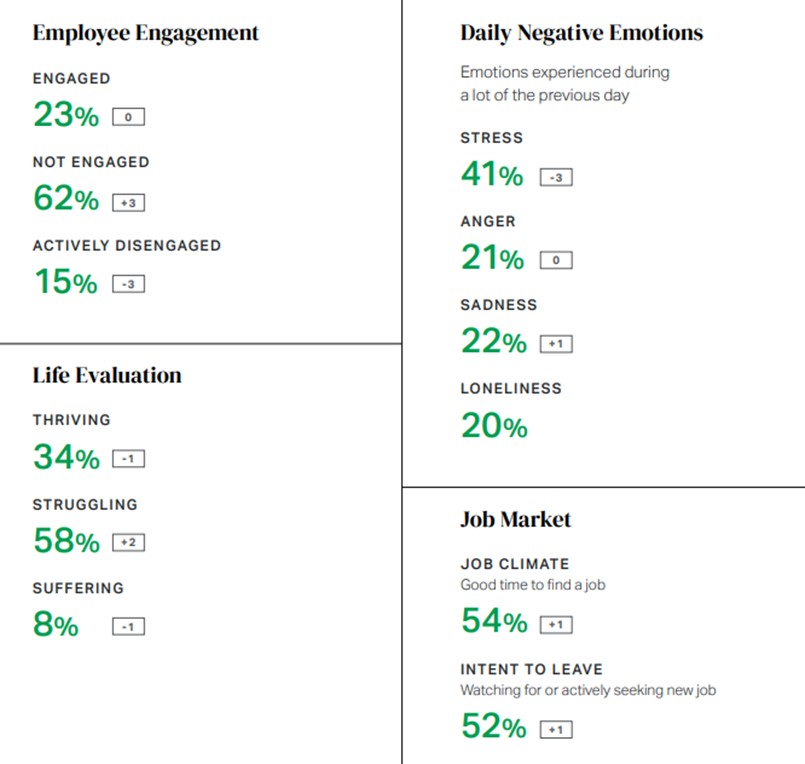
During a crisis, the leadership role extends from traditional oversight to embodying stability and clarity. Leaders are not only responsible for decisive actions but also for addressing underlying anxieties within their teams. A Deloitte report shows that consistent and transparent communication from senior leaders can foster trust and engagement, which are critical during uncertain times. Leaders are thus called to remain adaptable and empathetic, addressing both the operational and emotional needs of their workforce.

Adapting to crises requires a dynamic approach to leadership that balances immediate operational resilience with a forward-looking mindset. Key actions include:

While crises reveal organisational vulnerabilities, they may also uncover opportunities for growth and adaptation. The World Economic Forum reports that organisations accelerating digital transformation efforts during the COVID-19 pandemic often achieved substantial revenue growth post-crisis. This highlights how a proactive, future-focused approach can enable organisations to adapt and even capitalise on changes in the environment, transforming adversity into competitive advantages.

Effective crisis management involves looking beyond immediate issues to anticipate future challenges. Deloitte's research highlights that organisations with robust continuity plans are better equipped to handle subsequent crises. Leaders should prioritise risk anticipation, foster a culture of continuous learning, and reinforce organisational agility to create a workforce capable of thriving amidst ongoing uncertainties.

Leadership during crises requires a blend of strategic insight, adaptability, and empathy. For executives and senior managers, leading teams through uncertainty is as much about resilience as it is about building a foundation for long-term success.
Rather than solely responding to crises, leaders should cultivate an organisational culture ready to confront future challenges and to transform adversity into progress.
Last week, Vienna, a city known for its rich history, vibrant culture, and world-class venues, played host to one of our most memorable conferences . The event brought together professionals, thought leaders, and innovators from various industries, showcasing our capability as a global advisory firm in leadership.
This, our 121st, conference attracted many of our Senior Partners and Senior Consultants from more than 20 countries, making it a truly global event. With a focus on 'Innovation and Growth in Challenging Times', the program was packed with insightful presentations, interactive workshops, and lively panel discussions.
Some of the key highlights included:
Keynote Speakers: Thought leaders contributed to a truly inspiriting debate on Innovation and Growth in Challenging Times:
We are hugely grateful for their participation.
Sabine Pirkner, who heads up our office in the heart of Vienna, ensured there were numerous opportunities for networking, with dedicated sessions for attendees to exchange ideas and make meaningful connections. These included informal meet-and-greet sessions, lunchtime roundtables, and a gala dinner offering a fantastic setting to wrap up the event.
Vienna’s well-known coffeehouse culture played a subtle role, with several breaks offering traditional Viennese coffee and pastries. This created a relaxed and social environment that fostered deeper conversations among participants.
No visit to Vienna is complete without experiencing its rich cultural heritage. Sabine curated a cultural program that allowed all our attendees to immerse themselves in the city’s artistic traditions. We all enjoyed an exclusive teambuilding afternoon at Kunsthistorisches Museum Kunstkammer with the unbelievably competitive and focused team of Zoltan Petho, Lorri Lowe, Alexander Matties, Leila Othieno, Thorsten Marquadt and Anna Pommersbach declared the clear winners!
Feedback from participants was overwhelmingly positive. Many praised the seamless organization and the mix of high-level strategic and thought leadership content together with practical advice. The venue, the quality of speakers, and the opportunities for collaboration were all cited as standout features of the event.
"Vienna provided the perfect setting for our conference. The city’s charm, combined with the high quality of the sessions and the diversity of attendees, made this a truly exceptional experience," said Zoltan Petho, Chair of Friisberg.
This conference was a resounding success and the attendees returned to their respective countries with fresh insights and new connections. They also had a renewed confidence in Friisberg as a leading Management Consultancy firm with a world class specialism in Executive Search.
Friisberg is excited to announce its highly anticipated conference on 9th-11th October in Vienna, Austria. This year’s conference promises to be bigger and more impactful than ever, bringing together industry leaders, innovators and professionals from across the globe to share insights.
With an agenda packed with inspiring keynote speakers, and interactive workshops we aim to foster collaboration and spark meaningful conversations. We will have the opportunity to connect with peers, gain valuable knowledge, and be the first to experience Friisberg’s newest innovations. Attendees can expect a warm, welcoming atmosphere where relationships take centre stage. From casual networking events to in-depth collaborative sessions, this conference is about strengthening bonds and creating a sense of belonging.
“We are thrilled to bring together such a dynamic group of professionals and thought leaders for this year’s conference” said Zoltan Petho, Chair of Friisberg. “This conference is all about sharing ideas, and shaping our future, together. We look forward to creating an unforgettable experience for all and cementing our deep connections and shared values that make our company truly special.
“For Friisberg, people are the foundation of everything we do, and this event is a way for us to come together like family." said Sabine Pirkner, from our office in Vienna, "The success we’ve built is rooted in trust, support, and mutual growth, and our conference reflects that spirit of collaboration. Our team in Vienna can’t wait to welcome everyone and celebrate the next chapter in our already long history.”
Friisberg is proud to announce that Maarten van de Sande has been appointed to our Executive team. In this pivotal role, Maarten will spearhead our global expansion and drive the growth of our firm on an international scale.
Maarten brings a wealth of experience and a proven track record in business development and strategic growth. His expertise will be instrumental as we continue to expand our footprint across new markets and strengthen our presence in existing ones. His appointment aligns perfectly with our vision to enhance our global capabilities and deliver unparalleled value to our clients around the world.
Throughout his career, Maarten has demonstrated exceptional leadership and a deep understanding of the dynamics of global markets. His strategic insights and innovative approach are exactly what Friisberg needs as we embark on this next phase of growth. We are confident that Maarten will be a driving force in our mission to build and nurture strong, long-term relationships with clients and partners across the globe.
As we welcome Maarten to our executive team, we look forward to the exciting opportunities and achievements that lie ahead. His leadership will be crucial in navigating the complexities of international markets and ensuring that Friisberg continues to lead with excellence and integrity.
We are excited about the future and confident that, with Maarten's energy behind our global expansion efforts, Friisberg will continue its remarkable success.
You need to load content from hCaptcha to submit the form. Please note that doing so will share data with third-party providers.
More InformationYou need to load content from reCAPTCHA to submit the form. Please note that doing so will share data with third-party providers.
More InformationYou need to load content from reCAPTCHA to submit the form. Please note that doing so will share data with third-party providers.
More InformationYou need to load content from reCAPTCHA to submit the form. Please note that doing so will share data with third-party providers.
More InformationYou need to load content from Turnstile to submit the form. Please note that doing so will share data with third-party providers.
More Information