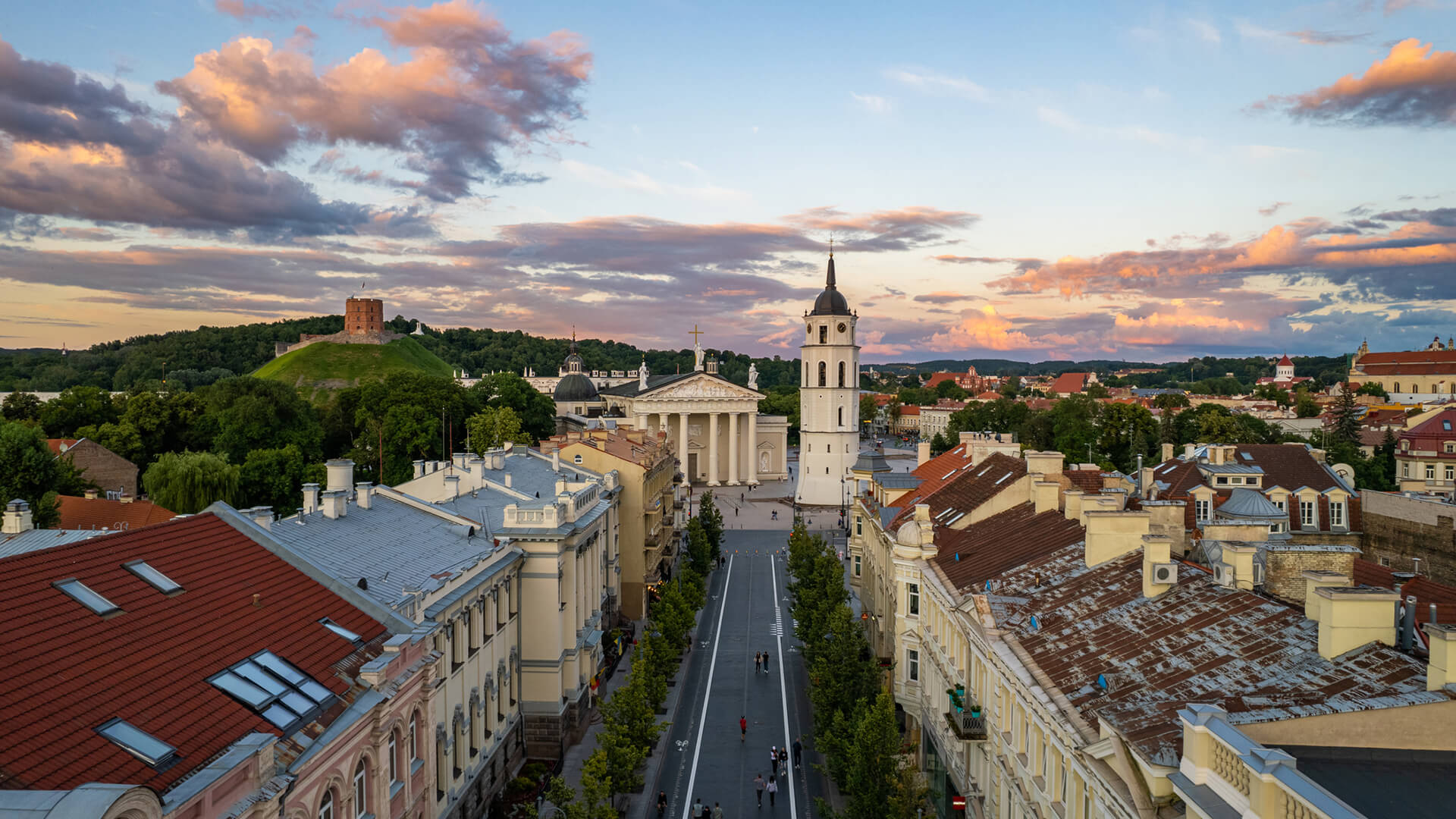
ithuania’s business culture continues to evolve at high speed, shaped by three decades of transformation, global integration, and the rise of new growth sectors. Through our work across Friisberg’s Lithuanian office, and in comparison, with other markets, we observe a culture that blends ambition, adaptability, and a growing international mindset.
While generational differences remain visible, the overall direction is clear: Lithuania is moving from hierarchical to collaborative, from cautious to opportunity driven, and from local to global in both expectations and capability.
Leaders in Lithuania share a strong sense of responsibility, discipline, and performance orientation. Younger leaders, many educated or trained internationally, tend to favour agile, participative, and innovation-driven approaches. In contrast, older or more traditional sectors retain elements of hierarchy, predictability, and controlled risk-taking.
The startup ecosystem, now complemented by thriving sectors beyond fintech and shared services (including deep tech, cybersecurity, manufacturing modernisation, and life sciences), is accelerating a widespread shift towards speed, experimentation, and global ambition. Today’s emerging leaders are fast, motivated, highly educated, and ready to take bold steps to scale businesses internationally.
Communication in Lithuania is typically direct, efficient, and task-focused. Small talk plays a role but remains secondary to purpose and written communication is valued for clarity and accountability.
Silence appears in interactions, reflecting a slightly Northern reserve and comfort with pauses, but it is not strong enough to be regarded as a defining cultural trait. Increasingly, we observe more open dialogue, constructive challenge, and cross-functional collaboration, especially in modern or internationally oriented environments.
Despite this openness, the results orientation remains pronounced: many professionals hold themselves and others to high standards, sometimes leaning more towards challenge than support.
In Lithuanian companies, decision-making is pragmatic, analytical, and notably fast. Teams prepare responsibly, gathering data and assessing feasibility, but it is the speed and decisiveness after alignment that truly stand out. Once direction is clear, execution moves quickly and iteratively.
This combination of responsible preparation followed by rapid action creates a strong 'doer' culture. People take initiative, focus on outcomes, and push for high-quality delivery.
Generational contrasts persist, with traditional environments valuing predictability and formality, but across sectors we observe a consistent ambition and readiness to take on greater responsibility.
Ambition in Lithuania is confident and outward looking. The talent pool is digitally fluent, internationally exposed, and eager to outperform expectations. A growing number of businesses, from tech scale-ups to modernised industrial companies, are targeting global markets and competing successfully.
Lithuanians usually separate professional and personal spheres more clearly than many Southern or Eastern European cultures. Professional relationships start formally and remain task-oriented and once trust develops, relationships become warm, loyal, and long term.
From Friisberg’s vantage point, Lithuania exemplifies a culture in transition:
This blend of cultural layers can create friction, but it also fosters resilience, flexibility, and sustained growth. In a small and highly adaptable country, businesses and leaders evolve quickly.
These insights reflect common patterns observed in professional settings. Every individual and organisation is unique, and no culture can be defined in absolute terms. Our aim is to highlight trends that international leaders may encounter when working across borders, and to share how Friisberg helps clients navigate these differences with respect and effectiveness.
You need to load content from hCaptcha to submit the form. Please note that doing so will share data with third-party providers.
More InformationYou need to load content from reCAPTCHA to submit the form. Please note that doing so will share data with third-party providers.
More InformationYou need to load content from reCAPTCHA to submit the form. Please note that doing so will share data with third-party providers.
More InformationYou need to load content from reCAPTCHA to submit the form. Please note that doing so will share data with third-party providers.
More InformationYou need to load content from Turnstile to submit the form. Please note that doing so will share data with third-party providers.
More Information